The Securities and Exchange Commission's (SEC) rulemaking activity is one of the most important regulatory developments for fintech companies to monitor.
In addition to final rules, proposed regulations, SEC agendas, staff interpretations, and examination priorities can all influence how firms assess risk, allocate resources, and prepare for future compliance obligations.
This article covers the rulemaking process, the regulators fintechs should follow, the most important SEC initiatives underway, and practical methods for staying on top of regulatory developments without creating unnecessary complexity.
What SEC Rulemaking Activity Means for Fintechs
SEC rulemaking activity is the process through which the SEC updates its regulatory framework and communicates its views on emerging issues affecting the securities markets. While some developments result in new rules, others take the form of guidance, policy statements, examination priorities, or enforcement initiatives.
Why Rulemaking Activity Matters Beyond Final Rules
Many firms pay attention once a rule is adopted because that's when deadlines, requirements, and implementation work become real. The challenge is that the SEC often signals its thinking long before then.
A proposal may reveal where the Commission wants to go. Examination priorities can show what staff are paying attention to right now. Even a speech or staff bulletin can give compliance teams a sense of which issues are gaining traction inside the agency.
For fintech companies operating in rapidly changing sectors such as digital assets, embedded finance, robo-advisory services, or alternative trading platforms, these signals can be just as important as final regulations.
How SEC Policy Changes Affect Fintech Business Models
The operational impact of a regulatory change is often broader than it first appears.
A new requirement affecting custody practices may touch several parts of the organization, from product and engineering teams to compliance, legal, operations, and third-party vendors. The same is true for marketing-related changes, which can affect content reviews, approval processes, disclosures, and customer communications.
The impact is often broader than many firms initially expect. What begins as a legal or compliance issue frequently becomes an operational issue as well.
The Difference Between Rules, Guidance, Interpretations, and Enforcement
One of the most common sources of confusion is the assumption that all SEC communications carry the same regulatory weight. They do not.
Regulatory Action | What It Means |
|---|---|
Final Rule | A formally adopted regulatory requirement that firms must follow. |
Proposed Rule | A potential future requirement that is open for public comment. |
Interpretive Release | The SEC's explanation of how it views existing laws or regulations. |
Staff Guidance | Non-binding guidance that provides insight into regulatory expectations. |
Examination Priorities | Areas the SEC's examination staff intends to focus on during reviews. |
Enforcement Actions | Cases brought against firms or individuals for alleged violations. |
Compliance teams do not have unlimited time or resources.
That’s why it’s important to distinguish between developments that may affect the business directly and those that simply provide additional context about regulatory priorities. Not every SEC announcement requires a policy update, a committee meeting, or a new control.
The goal is to identify the developments that matter and understand their potential impact before they become a regulatory issue.
Regly Monitor helps fintechs track and prioritize relevant updates →
How the SEC Rulemaking Process Works
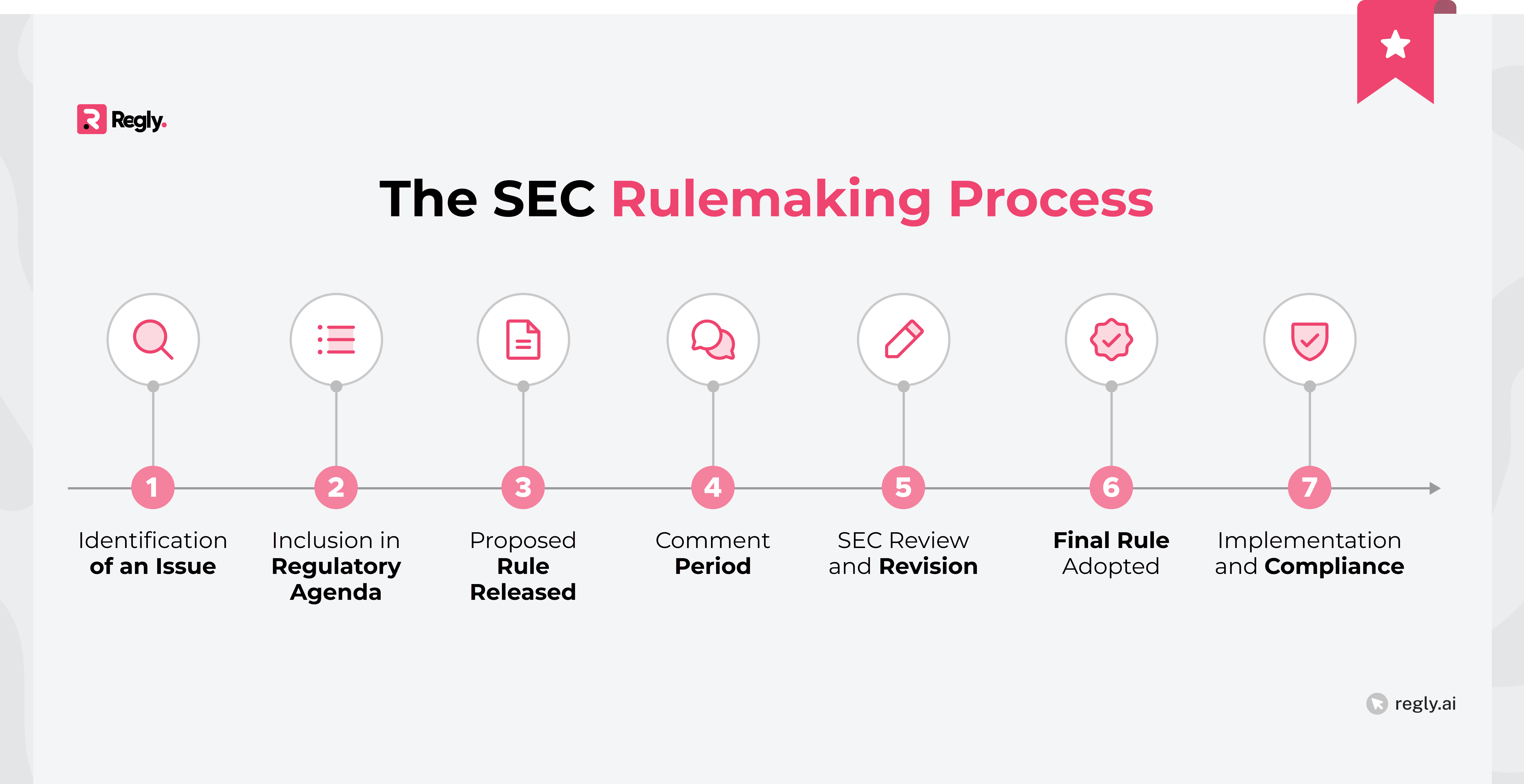
The SEC rulemaking process is often viewed as a series of formal votes and published regulations. In reality, most rulemaking initiatives develop over months or years before a final rule is adopted.
Understanding how the process works can help fintech firms distinguish between developments that require immediate action and those that are still evolving.
Proposed Rules vs. Final Rules
Most SEC rulemaking activity begins with a proposed rule.
At this stage, the SEC publishes the proposed regulatory text, explains its rationale, and invites public feedback. Proposed rules are not binding requirements. They are draft regulations that may be revised, delayed, or never adopted at all.
A final rule is issued only after the SEC reviews comments and votes to move forward. Once a final rule is adopted, firms can begin evaluating compliance dates, implementation requirements, and operational impacts.
For compliance teams, the proposal stage is often the first opportunity to assess how a future rule could affect the business.
Comment Periods and Public Input
Every proposed rule includes a public comment period.
During this time, industry participants, trade associations, law firms, technology providers, investors, and other stakeholders can submit feedback to the SEC. Comments may support, oppose, or suggest modifications to the proposal.
For fintech firms, comment letters can be surprisingly valuable. They often highlight implementation challenges, unintended consequences, and practical considerations that may not be obvious from the proposal itself.
In some cases, significant industry feedback has resulted in substantial revisions before a rule was finalized.
Interpretive Releases and Staff Guidance
Not every regulatory development comes through formal rulemaking.
The SEC also publishes interpretive releases, staff guidance, risk alerts, FAQs, and public statements that clarify how existing regulations may apply to specific activities.
These publications do not create new laws, but they can provide insight into how regulators view emerging products, technologies, and business practices.
For fintech firms operating in newer sectors such as digital assets, AI-enabled services, or tokenization, these materials often provide important context between major rulemaking initiatives.
SEC Agendas and Rulemaking Timelines
Twice each year, federal agencies publish regulatory agendas outlining rulemaking projects that may be considered over the coming months.
For fintech compliance teams, these agendas can serve as an early warning system. They provide visibility into topics regulators are actively evaluating, even when a proposal has not yet been released.
That visibility is particularly useful because rulemaking timelines are rarely predictable. Some proposals move quickly. Others remain under consideration for years.
A regulatory agenda should be viewed as an indication of priorities rather than a guarantee that a rule will be adopted.
Why Fintechs Should Monitor Proposals Before Adoption
By the time a final rule arrives, much of the policy discussion has already taken place.
The proposal stage is often where firms first learn how regulators are approaching a particular issue. It’s also the point when businesses can begin evaluating potential impacts on products, operations, disclosures, vendors, and compliance programs.
For firms operating in highly regulated sectors, following SEC rulemaking activity early can make future planning easier. Even when a proposal never becomes a final rule, it may still provide useful insight into the SEC's thinking and areas of regulatory focus.
The Regulators Behind SEC Rulemaking Activity
While the SEC is the primary regulator responsible for federal securities regulation, it does not operate in isolation. Many rulemaking initiatives affect multiple regulators, and fintech firms often find themselves navigating overlapping expectations from several agencies at once.
SEC Divisions Fintechs Should Know
Most SEC rulemaking activity originates from specific divisions and offices within the agency. Some of the most relevant groups for fintech companies include:
SEC Division | Why It Matters |
|---|---|
Division of Trading and Markets | Oversees broker-dealers, exchanges, ATSs, and market structure rules. |
Division of Investment Management | Oversees investment companies, investment advisors, and wealthtech firms. |
Division of Corporation Finance | Reviews public company disclosures and securities offerings. |
Division of Enforcement | Investigates potential violations of securities laws. |
Division of Examinations | Conducts examinations and publishes annual exam priorities. |
FINRA's Role in Implementation and Examinations
Although the Financial Industry Regulatory Authority (FINRA) does not create SEC rules, it plays a significant role in how many securities regulations are implemented and supervised.
Broker-dealers are subject to both SEC and FINRA oversight. When the SEC adopts a new rule affecting broker-dealers, FINRA often issues guidance, examination materials, and implementation resources that help firms understand regulatory expectations.
For broker-dealer fintechs, monitoring SEC rulemaking without monitoring FINRA developments provides only part of the picture.
This is particularly important for firms operating alternative trading systems, digital asset businesses, retail trading platforms, and other innovative brokerage models.
CFTC Overlap in Crypto and Digital Assets
The relationship between the SEC and the Commodity Futures Trading Commission (CFTC) remains one of the most closely watched regulatory issues in digital assets.
Generally speaking, the SEC regulates securities, while the CFTC oversees commodities and derivatives markets. In practice, however, determining whether a digital asset falls within one category or the other is not always straightforward.
As crypto-related rulemaking evolves, fintech firms should pay attention to developments from both agencies. Regulatory positions taken by one regulator often influence discussions occurring at the other.
This overlap becomes particularly important for businesses involved in tokenization, digital asset trading, staking services, derivatives, or other crypto-related activities.
FinCEN and AML-Related Coordination
Rulemaking affecting financial crime compliance often involves more than securities regulation alone.
The Financial Crimes Enforcement Network (FinCEN) administers the Bank Secrecy Act framework and plays a central role in AML, sanctions compliance, suspicious activity monitoring, customer identification, and beneficial ownership requirements.
When fintech firms evaluate new SEC developments, they should also consider related obligations under FinCEN regulations.
This intersection has become increasingly important as regulators place greater emphasis on financial crime controls, operational resilience, and risk management.
State Securities Regulators and NASAA
Federal securities laws represent only part of the regulatory landscape.
State securities regulators are still active in investor protection, registration requirements, examinations, investigations, and enforcement actions. Many coordinate through the North American Securities Administrators Association (NASAA).
For investment advisors, crowdfunding platforms, and certain emerging fintech business models, state-level developments can sometimes create additional compliance considerations beyond federal requirements.
A rulemaking initiative at the federal level does not always eliminate state regulatory obligations. Firms should evaluate both layers when assessing regulatory change.
Regulator | Primary Focus |
|---|---|
SEC | Securities markets, broker-dealers, investment advisors, public companies, securities offerings |
FINRA | Broker-dealer supervision and self-regulatory oversight |
CFTC | Commodities, derivatives, futures, swaps |
FinCEN | AML and Bank Secrecy Act compliance |
NASAA | Coordination among state securities regulators |
State Securities Regulators | State securities laws and examinations |
CFPB | Consumer financial products and services |
Federal Banking Regulators (OCC, Federal Reserve, FDIC) | Banking supervision and safety and soundness |
The Trending SEC Rulemaking Activity Areas in 2026
In 2026, several areas continue to attract significant attention from the SEC and other financial regulators. While specific proposals and priorities may evolve, the underlying themes have remained consistent: digital assets, artificial intelligence, cybersecurity, market infrastructure, and investor protection.
Crypto Asset Regulation
Crypto remains one of the most closely watched areas of SEC rulemaking activity.
Over the past several years, regulators have continued to evaluate how existing securities laws apply to digital assets, tokenized products, custody arrangements, trading platforms, and related market participants. Questions surrounding asset classification, registration requirements, custody standards, and disclosure obligations remain active topics across the regulatory landscape.
For fintech firms operating in digital assets, the challenge is determining how existing regulations apply to new technologies and business models.
Rulemaking activity involving digital assets frequently intersects with SEC guidance, enforcement actions, CFTC developments, FinCEN requirements, and state-level regulations.
AI and Emerging Technology
Artificial intelligence has rapidly moved from a technology discussion to a regulatory discussion.
The SEC has repeatedly highlighted concerns involving AI-driven investment tools, predictive analytics, automated decision-making, model governance, and marketing claims related to artificial intelligence. Regulators are increasingly focused on whether firms can explain how AI-driven systems operate and whether disclosures accurately reflect the technology being used.
For fintech companies adopting AI, regulatory attention often extends beyond the technology itself. Governance, supervision, testing, documentation, and transparency are becoming equally important considerations.
Cybersecurity and Data Protection
Cybersecurity remains a major area of regulatory focus across the financial services industry.
Recent SEC initiatives have placed greater emphasis on incident reporting, data protection, operational resilience, vendor oversight, and cybersecurity governance. Regulators continue to evaluate how firms identify, manage, and respond to cyber-related risks.
This is particularly relevant for fintech firms that rely heavily on cloud providers, third-party technology vendors, APIs, and interconnected digital infrastructure.
Many cybersecurity-related compliance challenges now extend beyond internal systems and include oversight of critical service providers and vendors.
Broker-Dealer and Trading Infrastructure Rules
Some of the SEC's most consequential rulemaking efforts in recent years have focused on how securities markets operate behind the scenes.
Topics such as best execution, order routing, trade reporting, recordkeeping, alternative trading systems, and supervisory controls continue to receive regulatory attention. While these issues may sound technical, they can directly affect how broker-dealers execute trades, oversee customer activity, and document compliance with regulatory requirements.
For fintech broker-dealers, changes in these areas often extend beyond the compliance function. New requirements may influence platform design, operational workflows, customer disclosures, and internal supervision processes.
Investment Advisor and Wealthtech Rulemaking
Investment advisors and wealthtech firms continue to face an evolving regulatory environment.
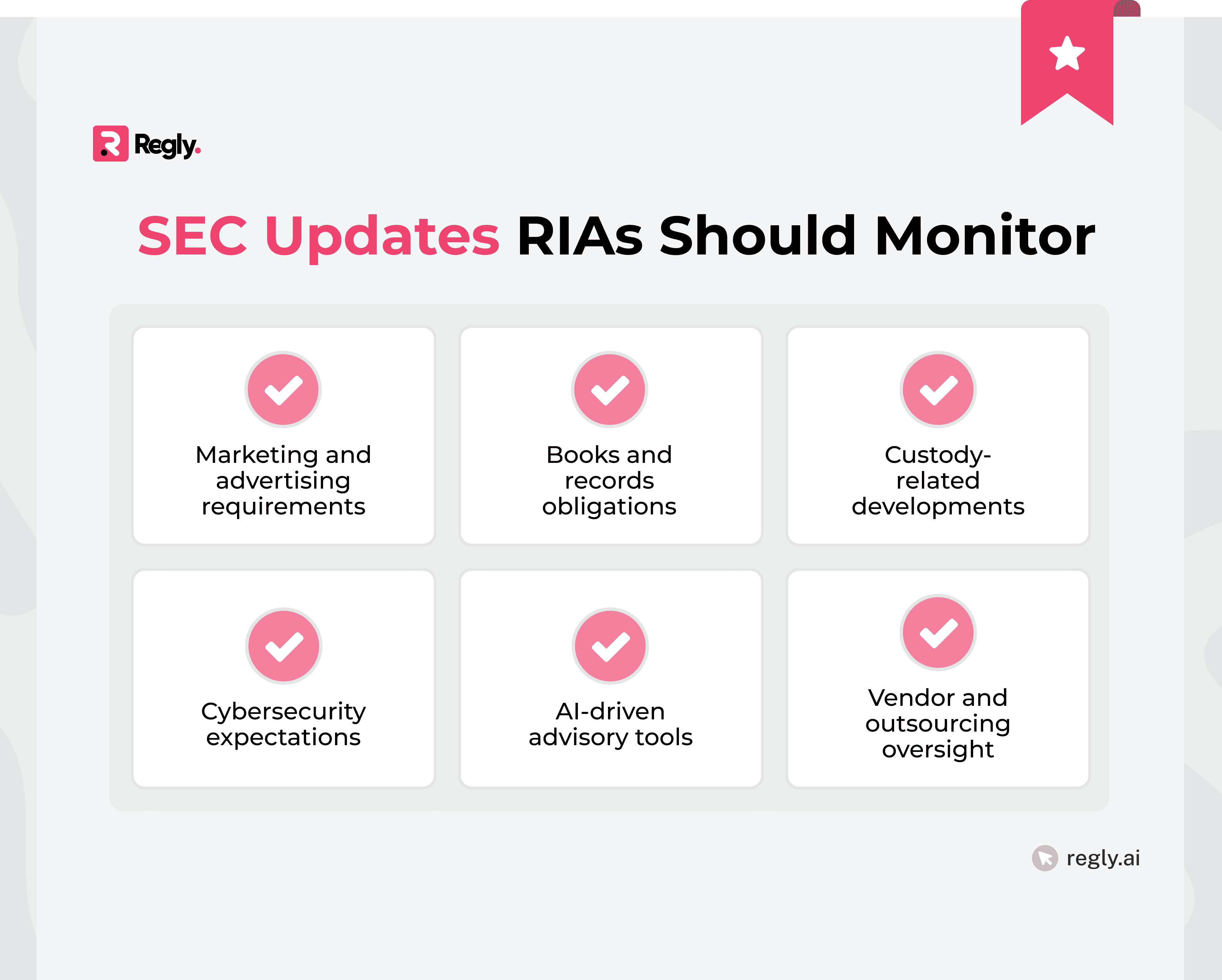
SEC rulemaking activity in this area has focused on topics such as custody, outsourcing, marketing practices, cybersecurity, books and records requirements, and the use of emerging technologies within advisory services.
As digital advisory platforms become more sophisticated, regulators are paying closer attention to how firms supervise automated processes, communicate with clients, and manage conflicts of interest.
For fintech firms operating in the wealth management space, understanding these developments is becoming increasingly important as technology-driven advisory models continue to mature.
How Different Fintech Models Should Monitor SEC Rulemaking Activity
Not every fintech firm faces the same regulatory risks: a broker-dealer launching a new trading feature will likely monitor different developments than a robo-advisor, crowdfunding platform, or tokenization company. While all fintechs should pay attention to SEC rulemaking activity, the specific areas of focus often depend on the firm's business model:
Broker-Dealer Fintechs
Broker-dealers are often directly affected by SEC rulemaking activity involving market structure, trading practices, recordkeeping, customer communications, and supervisory controls.
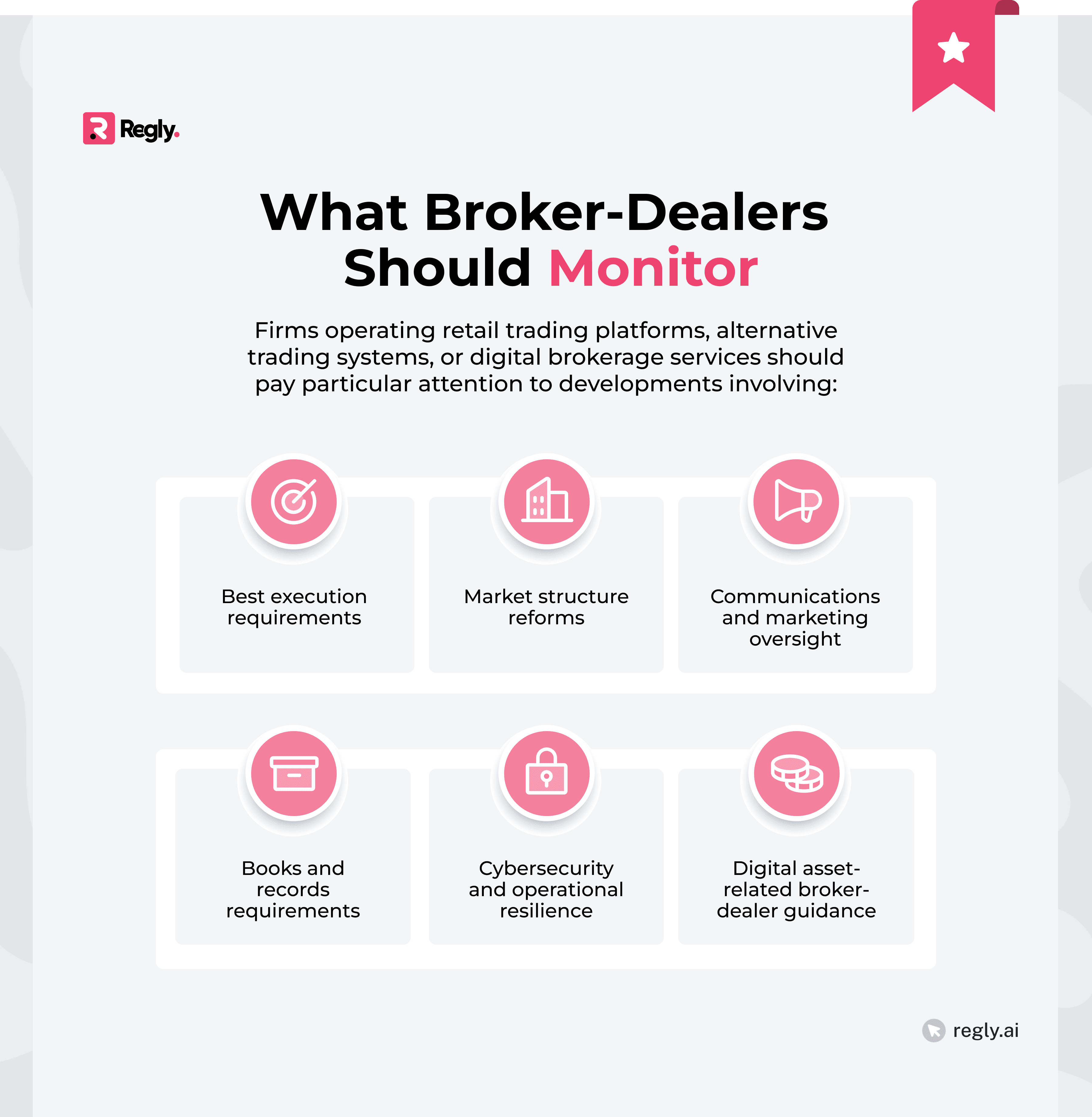
Because broker-dealers are also subject to FINRA oversight, rulemaking activity should be evaluated alongside FINRA examination priorities and guidance.
Crypto Platforms and Tokenization Firms
Few sectors experience as much regulatory uncertainty as digital assets.
Crypto exchanges, tokenization platforms, staking providers, and other digital asset businesses should closely monitor SEC developments involving asset classification, custody requirements, disclosures, trading activities, and registration obligations.
Regulatory developments from the SEC rarely exist in isolation. Many crypto-related issues involve overlapping considerations from the CFTC, FinCEN, state regulators, and, in some cases, banking regulators.
For digital asset firms, understanding regulatory overlap is often just as important as understanding individual SEC initiatives.
RIAs and Wealthtech Firms
Investment advisors and wealthtech companies should focus on rulemaking activity that affects advisory services, client communications, custody arrangements, outsourcing, and technology-driven investment processes.
Learn more about monitoring SEC updates →
As digital advice models become increasingly automated, regulators continue to examine how firms supervise technology-assisted recommendations and maintain appropriate client disclosures.
Funding Portals and Crowdfunding Platforms
Crowdfunding businesses operate within a unique regulatory framework that combines securities regulation with investor protection requirements.
These firms should pay close attention to developments involving disclosure standards, investor communications, platform supervision, recordkeeping obligations, and evolving approaches to capital formation.
Although crowdfunding rulemaking receives less attention than crypto or AI, regulatory changes can still have a meaningful impact on platform operations and compliance programs.
Hybrid Financial Platforms
Many modern fintech companies no longer fit neatly into a single regulatory category.
A single platform may combine brokerage services, digital assets, payments functionality, investment advice, rewards programs, or banking partnerships. As products become more integrated, regulatory monitoring becomes more complex.
For these firms, the challenge is often identifying which regulatory developments affect which business lines. A change that appears relevant to one product may ultimately have implications across several areas of the organization.
This is one reason many fintech compliance teams are moving toward structured regulatory monitoring programs. Rather than tracking developments manually across multiple regulators, they are increasingly using workflows and technology to organize, prioritize, and assign regulatory updates based on business impact.
How Fintech Teams Can Monitor SEC Rulemaking Activity More Effectively
The volume of regulatory information can become difficult to manage. New proposals, guidance, examination priorities, enforcement actions, and industry developments are published throughout the year, often across multiple regulators.
Teams don’t need to track every update. Instead, they should focus on identifying the developments most relevant to their business model and compliance obligations.
Building a Practical Regulatory Monitoring Process
Effective regulatory monitoring starts with a structured process.
Rather than reviewing every regulatory announcement individually, firms should establish a framework for evaluating developments based on business impact, regulatory relevance, and implementation risk.
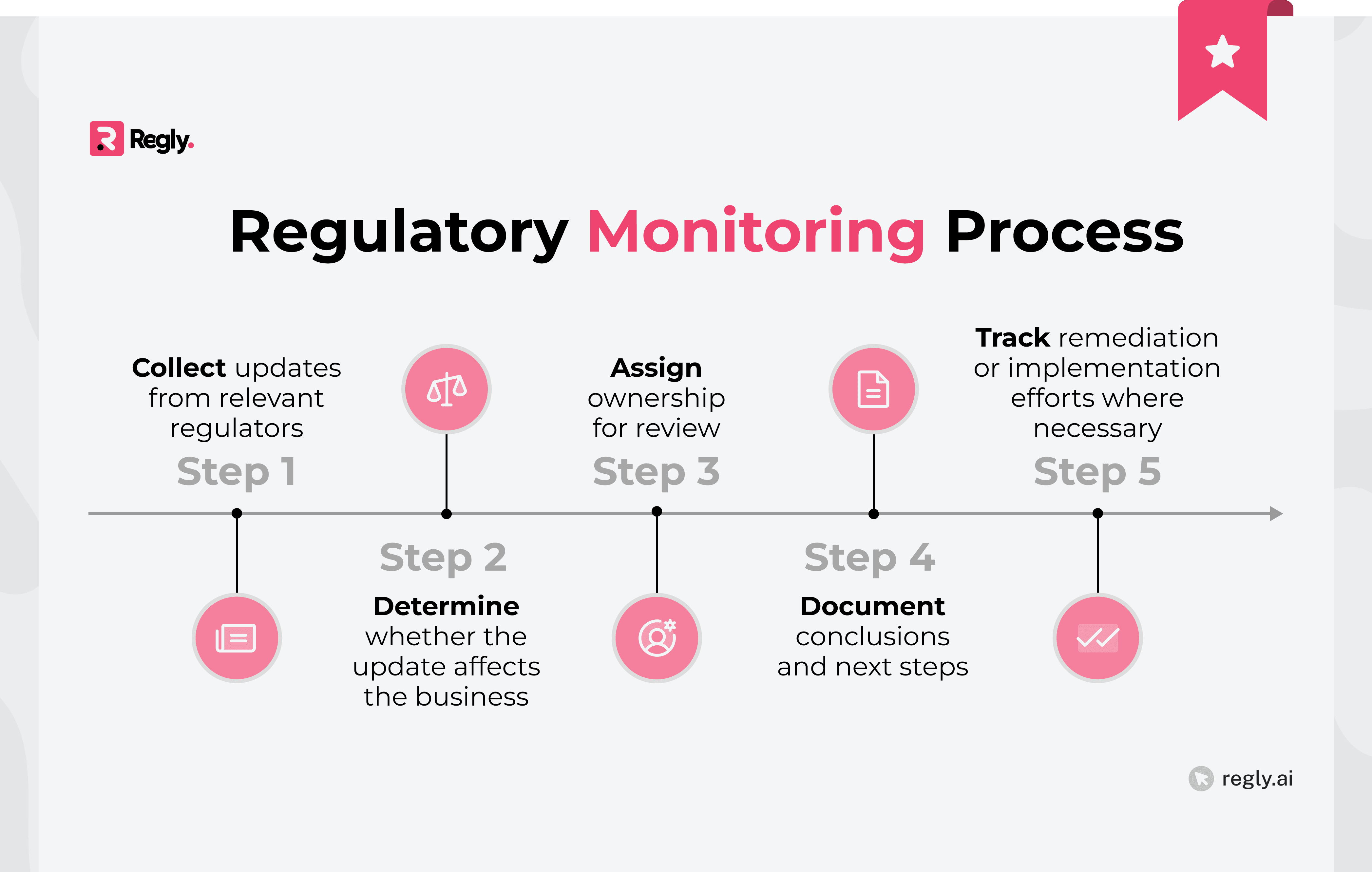
This approach can help compliance teams focus attention on meaningful developments while avoiding unnecessary work.
Learn more about financial regulation news monitoring →
Using SEC Agendas and Releases Strategically
Many firms focus only on finalized regulations. In practice, some of the most useful information appears much earlier.
SEC agendas, proposed rules, speeches, staff guidance, and risk alerts can provide insight into emerging priorities before formal requirements are adopted.
Reviewing these materials regularly can help firms identify trends and assess whether future changes may affect products, operations, disclosures, or compliance programs.
Monitoring Examination Priorities and Risk Alerts
The SEC's annual examination priorities provide one of the clearest views into areas receiving regulatory attention.
While examination priorities are not new regulations, they often highlight topics exam staff expect firms to address. Areas that appear repeatedly may warrant additional review, particularly if they align with a firm's business activities.
Risk alerts can provide similar value by identifying observations, deficiencies, and emerging concerns during examinations.
Using Regulatory Monitoring Tools
Many firms are moving toward centralized regulatory monitoring systems that do more than collect updates.
For example, Regly monitors regulatory developments across agencies such as the SEC, FINRA, FinCEN, and state regulators, then helps compliance teams assess which updates may be relevant to their business. Regulatory changes are summarized, categorized, and presented in a way that allows teams to quickly understand potential impacts without reviewing every source manually.
Users can also configure monitoring criteria based on their business model, regulatory obligations, and areas of interest, helping compliance teams focus on the developments that matter most.
Learn more about our regulatory monitoring tool →
Tracking Enforcement Trends Without Overreacting
When a major enforcement action is announced, the immediate reaction is often to ask whether the rules have changed.
In many cases, they have not. Regulators are frequently applying existing requirements to new facts, products, or business practices. The value of an enforcement action is often found in the details of the case rather than the headline itself.
Reviewing those details can help firms identify potential weaknesses in their own controls, processes, and supervisory frameworks.
Turning Regulatory Updates Into Operational Workflows
A regulatory update has little value if it never moves beyond an email inbox.
The most effective compliance programs create a repeatable process for evaluating updates, assigning responsibility, documenting decisions, and tracking follow-up actions where appropriate.
This is where regulatory monitoring becomes an operational function rather than a research exercise. When updates are connected to workflows, ownership, and documentation, firms can more effectively translate regulatory developments into practical business actions.
—
For fintech founders and compliance teams, SEC rulemaking influences how products are built, how risks are managed, and how firms prepare for future growth.
Not every proposal becomes a rule, and not every regulatory announcement requires action. But understanding where regulators are focusing their attention can help firms make more informed decisions and avoid being caught off guard by future developments.
As the regulatory landscape continues to evolve, structured monitoring and a practical review process can help firms separate meaningful developments from regulatory noise.
Ready to Get Started?
Schedule a demo today and find out how Regly can help your business.