Third-party risk is a growing concern for regulated fintech companies that rely on external vendors to run key parts of their business. These relationships can help fintech companies grow faster and operate more efficiently, but they can also create risks if they’re not managed properly.
Regulators expect firms to have a clear handle on them. It’s not enough to approve a vendor once and move on. You need to understand how each vendor affects your business and keep track of that risk over time.
This article explains what third-party risk is, why it matters, and how to manage it step by step. You’ll also see the main types of risk to watch for, how to review vendors, and what regulators tend to focus on during exams.
What Is Third-Party Risk?
Third-party risk comes from relying on outside vendors or service providers to run parts of your business. These could be:
Cloud providers
Payment processors
When you depend on them, their problems can become your problems.
For regulated firms, this can get serious. If a vendor has a data breach, a system outage, or weak controls, it can lead to compliance issues, customer impact, or operational disruptions. Even if the issue starts with the vendor, your firm is still responsible for how that relationship was handled.
It also doesn’t stay the same over time. A vendor that looked low risk at the beginning can become more critical as your business grows or as regulations change.
That’s why third-party risk isn’t something you check once and move on from. It needs regular attention and clear oversight.
Why Third-Party Risk Matters for Regulated Firms
For regulated firms, third-party risk affects compliance, operations, and customer trust. Here are the main reasons it matters:
Regulatory accountability doesn’t shift to vendors: Regulators like the SEC, FINRA, and banking agencies expect firms to manage their vendors actively. If something goes wrong, responsibility stays with your firm, even if the issue started with a third party.
Vendor failures can lead to real operational disruptions: Service outages, system failures, or missed deliverables can interrupt critical business functions. For fintech companies that rely on external infrastructure, even a short disruption can affect multiple parts of the business.
Data exposure risk increases with vendor access: Many vendors handle sensitive customer or transaction data. Weak security controls on their side can lead to breaches that impact your firm directly.
Compliance gaps often come from weak oversight: Poor due diligence, limited monitoring, or unclear ownership of vendor relationships can create blind spots. These gaps are commonly flagged during regulatory exams.
Customer impact can be immediate and visible: If a vendor fails, customers may experience delays, errors, or loss of access to services. This can quickly lead to complaints and reputational damage.
Business continuity depends on third parties: If a critical vendor goes down or exits unexpectedly, your ability to operate may be affected. Without backup plans, recovery can take longer than expected.
Types of Third-Party Risk
Third-party risk isn’t a single issue. It shows up in different ways depending on the vendor, the service they provide, and how critical they are to your business. Below are the main categories firms should pay attention to.
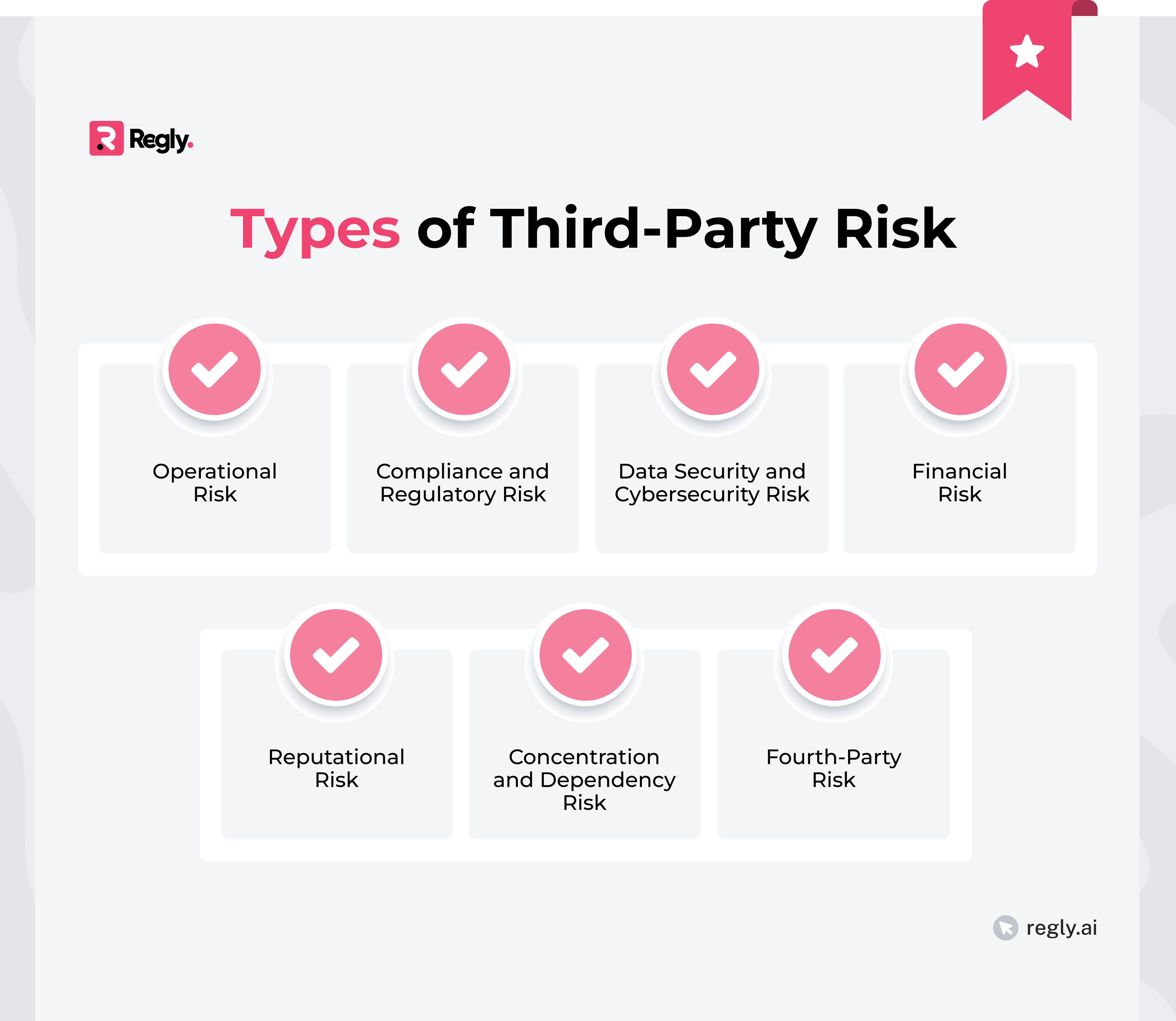
1. Operational Risk
Operational risk comes up when a vendor fails to deliver the service you rely on. This can include:
Downtime
Processing errors
Delays
Inconsistent performance that disrupts how your business runs
For fintech firms, this often affects critical systems like payments, onboarding, or transaction processing. When those systems go down, the impact is immediate. Teams can’t complete workflows, and customers may lose access to key services.
Example: A fintech company relies on a third-party payment processor to settle transactions. If that processor goes down, payments may be delayed or fail entirely. Customers might see duplicate charges or missing transactions, and support teams can quickly get overwhelmed.
Because of this, firms need to look beyond basic functionality. It helps to review uptime history, incident response processes, and whether the vendor has backup systems in place if something goes wrong.
2. Compliance and Regulatory Risk
Compliance and regulatory risk emerge when a vendor creates problems with your ability to follow the rules.
This is common when vendors handle things like onboarding, transaction monitoring, or reporting. If their processes are weak or not kept up to date, it can lead to missed checks or incomplete records.
Example: Let’s say you use a vendor for identity verification. If they don’t screen customers properly or miss updates to sanctions lists, you could end up onboarding someone you shouldn’t. That can quickly lead to questions from regulators.
To manage this, you need to understand:
How your vendors handle compliance tasks
What controls they have
How they keep those controls current
3. Data Security and Cybersecurity Risk
Data security and cybersecurity risk enter the picture when a vendor has access to sensitive information or systems. If their security controls are weak, your data can be exposed or misused.
Many fintech vendors handle customer data, transaction details, or account information. This makes them a common target for cyberattacks. If they get breached, your firm is affected too, even if your own systems weren’t directly involved.
Example: A firm uses a cloud-based vendor to store customer data. If that vendor is compromised, attackers could gain access to personal and financial information. Customers may face fraud risks, and the firm may need to report the incident and deal with regulatory follow-up.
To manage this risk, you need to review how vendors protect data, control access, and respond to incidents. It’s also important to understand where data is stored and who else might have access to it.
4. Financial Risk
Financial risk surfaces when a vendor’s financial health affects their ability to support your business. If a vendor is unstable, it can lead to sudden service disruptions or force you to replace them on short notice.
This risk is often overlooked, especially with newer fintech vendors or startups that are still growing. If they run into funding issues, cut operations, or shut down, your firm may lose access to a critical service.
Example: A firm relies on a small vendor for a core compliance tool. Over time, the vendor struggles financially and stops maintaining the product. Updates slow down, support becomes unreliable, and eventually the service is discontinued. The firm then has to find a replacement quickly, which can be costly and disruptive.
To manage this risk, it helps to review a vendor’s:
Financial position
Funding sources
Long-term viability
You should also think about how easy it would be to switch vendors if needed.
5. Reputational Risk
Reputational risk becomes a factor when a vendor’s actions affect how your firm is perceived by customers, regulators, or the market. Even if you’re not directly involved, your association with that vendor can reflect back on your business.
This can happen if a vendor has poor customer practices, negative press, or repeated service issues. In fintech, where trust matters a lot, these situations can quickly impact how customers view your platform.
Example: A firm partners with a third-party onboarding provider that later faces public complaints about misleading practices. Even if your firm isn’t responsible for those actions, customers may start to question your standards and raise concerns.
To manage this risk, look beyond technical capabilities. You should understand:
How vendors operate
How they treat customers
Whether they’ve had any past issues that could affect your reputation
6. Concentration and Dependency Risk
Concentration and dependency risk arise when your business relies too heavily on a small number of vendors, or even a single vendor, for critical functions. If that vendor fails or becomes unavailable, it can be hard to keep things running.
This is common in fintech, where firms often build around a few key providers for infrastructure, payments, or data services. Over time, those vendors become deeply embedded in daily operations.
Example: A company relies on one cloud provider to host its entire platform. If that provider has a major outage, the firm may lose access to its systems completely. Without backup arrangements, recovery can take time and affect customers across the board.
To manage this risk, identify where you’re most dependent on vendors and think through alternatives. This could include backup providers, contingency plans, or ways to shift operations if a vendor becomes unavailable.
7. Fourth-Party Risk
Fourth-party risk comes from your vendor’s vendors. Even if you’ve done a solid review of your direct third party, they may rely on other service providers that you don’t control or fully see.
This matters because those downstream providers can still affect your operations, data, and compliance. If something goes wrong at that level, the impact can still reach your firm.
Example: You work with a vendor that provides cloud-based onboarding tools. That vendor relies on another cloud infrastructure provider to host its systems. If that underlying provider has a security issue or outage, your onboarding process could be affected, even though you don’t have a direct relationship with them.
To manage this risk, start by understanding your vendor’s dependencies and whether they use subcontractors. You should also review how they monitor those relationships and what controls they have in place.
The Third-Party Risk Lifecycle
Managing third-party risk is a process that starts before you onboard a vendor and continues for as long as the relationship exists. Each stage plays a role in how well you understand and control vendor risk.
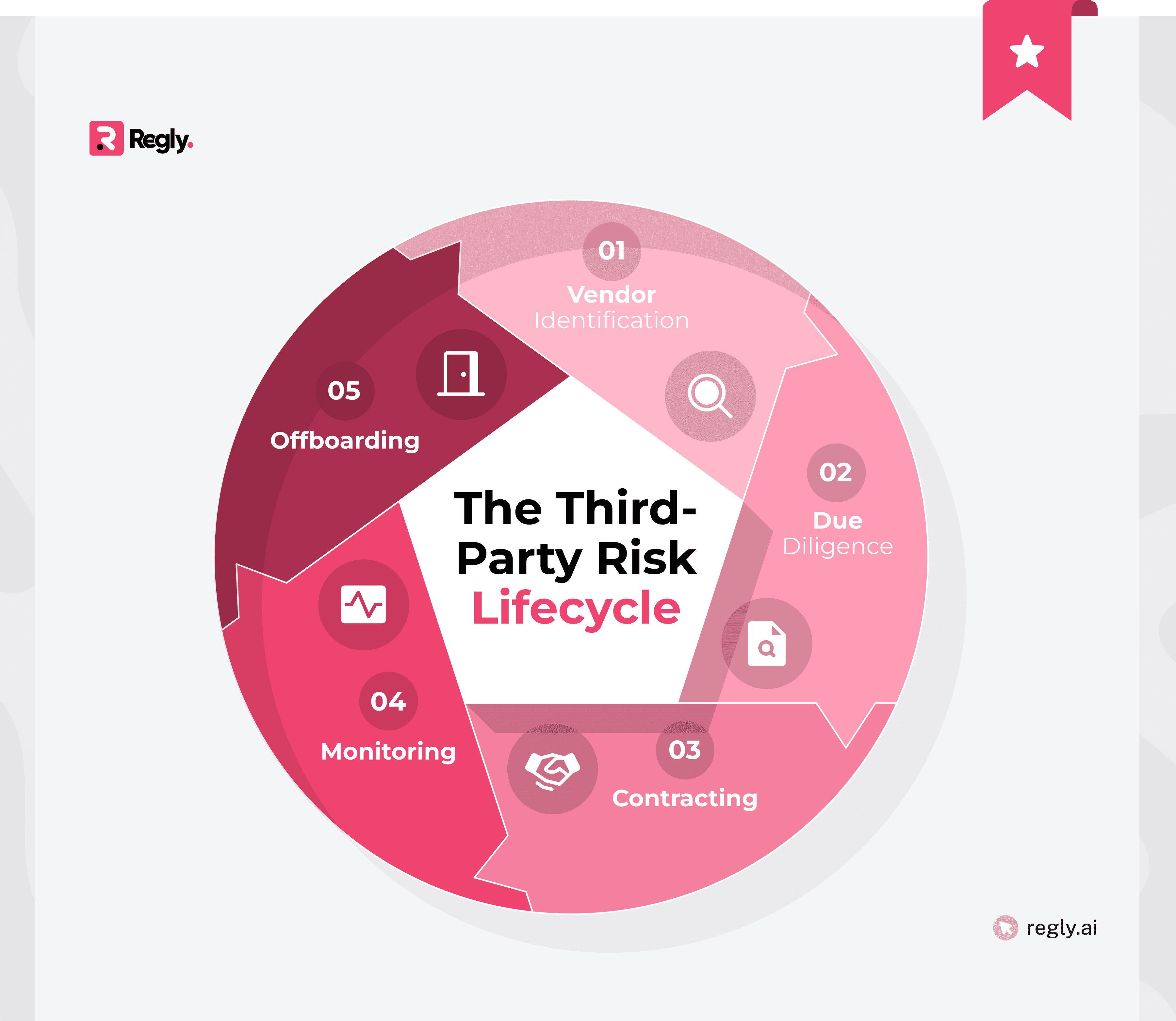
1. Vendor Identification and Risk Tiering
The first step is to get a clear view of all the vendors your firm works with and their functions. This means building a simple, accurate list and understanding how each vendor fits into your day-to-day operations.
From there, group vendors based on risk. Not all vendors need the same level of attention. Those that handle sensitive data, support core systems, or are tied to regulated activities carry more risk and need closer oversight.
2. Due Diligence and Risk Assessment
Once you’ve identified and tiered your vendors, the next step is to review them more closely. This is where you look at how the vendor operates and whether they can support your business without introducing unnecessary risk.
The level of review should match the vendor’s risk tier. Higher-risk vendors usually require a deeper review, including their controls, policies, and overall track record. Lower-risk vendors may only need a lighter check.
This step helps you spot issues early. It also points to where a vendor is strong and where there may be gaps you need to address before moving forward.
Learn more about due diligence →
3. Contracting and Risk Allocation
After you’ve reviewed a vendor, put clear terms in place. The contract should outline what the vendor is responsible for and how risk is shared between both parties.
This includes:
Service expectations
Data handling requirements
How issues will be managed if something goes wrong
For higher-risk vendors, contracts often include more detailed provisions around security, reporting, and audit rights.
A well-structured contract helps avoid confusion later. It sets clear expectations upfront and gives you a reference point if performance or compliance issues come up.
4. Ongoing Monitoring and Oversight
Vendor risk doesn’t stop once the contract is signed. Keep an eye on how the vendor is performing and whether anything has changed over time.
This can include:
Reviewing performance metrics
Tracking incidents
Checking for updates to their controls or business operations
Regular oversight helps you catch issues early and respond before they turn into bigger problems. It also shows regulators that you’re actively managing your vendor relationships, not just setting them up and forgetting about them.
To simplify this process, firms often use tools such as Regly’s monitoring software to continuously scan the web for vendor-related news, risk events, and compliance updates so teams can identify potential issues earlier and maintain ongoing visibility into third-party risk.
5. Offboarding and Exit Planning
Every vendor relationship should have an end plan, even if you don’t expect to use it right away. Things can change quickly, and you don’t want to figure this out under pressure.
Offboarding includes steps like:
Transferring data
Revoking access
Making sure there’s no disruption to your operations
For critical vendors, this also means having a backup plan or an alternative provider in mind.
A clear exit plan helps you stay in control. If a vendor underperforms, shuts down, or no longer fits your needs, you can move on without putting your business at risk.
How to Conduct a Third-Party Risk Assessment
Once you have your vendors identified, the next step is to assess the level of risk each one brings. This determines the degree of oversight needed and where to focus your attention first.
Key Risk Factors to Evaluate
When you assess a vendor, the goal is to understand how much risk they introduce and the source of that risk. This usually comes down to a few core factors that apply across most vendors.
Access to sensitive data: Does the vendor handle customer information, transaction data, or internal systems? The more access they have, the higher the risk.
Impact on operations: If the vendor goes down, how much of your business is affected? Vendors tied to critical workflows carry more weight.
Regulatory exposure: Does the vendor support a regulated activity like onboarding, reporting, or monitoring? If yes, their performance can directly affect your compliance obligations.
Security controls: How strong are their data protection and cybersecurity measures? This includes access controls, encryption, and incident response.
Financial stability: Is the vendor likely to stay in business and continue supporting your needs? Financial issues can lead to service disruptions.
Use of subcontractors: Does the vendor rely on other providers to deliver their service? If they do, that adds another layer of risk you need to understand.
Looking at these factors together gives you a clearer picture of where each vendor stands and how closely you need to manage them.
Sample Risk Scoring Framework
Once you’ve identified the key risk factors, the next step is to score them in a consistent way. This helps you compare vendors and decide which ones need more attention.
A simple approach is to assign a score to each factor, then combine those scores into an overall risk rating.
Example framework:
Risk Factor | Low (1) | Medium (2) | High (3) |
|---|---|---|---|
Data Access | No sensitive data | Limited internal data | Customer or financial data |
Operational Impact | Minimal disruption | Partial workflow impact | Critical system dependency |
Regulatory Exposure | No regulated activity | Indirect support | Direct role in compliance processes |
Security Controls | Strong, independently tested | Basic controls in place | Limited or unclear controls |
Financial Stability | Established, stable | Moderate risk | Early-stage or unstable |
You can then total the score to group vendors into tiers. For example:
Low risk: 5–7
Medium risk: 8–11
High risk: 12–15
This doesn’t need to be complex. What matters is consistency. When every vendor is scored the same way, it’s easier to justify decisions and show regulators how you prioritize risk.
Red Flags to Watch For
As you review vendors, certain warning signs may emerge. Spotting these early can save time and help you avoid bigger issues later.
Limited transparency: If a vendor is slow to share information or avoids answering basic questions about their controls, that’s a concern. You need clear visibility into how they operate.
Outdated or missing documentation: Policies, audit reports, or security documents that are old or incomplete can point to weak internal processes.
Frequent incidents or outages: A pattern of downtime or unresolved issues may signal deeper operational problems.
Weak security practices: Lack of clear access controls, no incident response plan, or vague answers around data protection should be taken seriously.
Heavy reliance on subcontractors without clarity: If a vendor depends on other providers but can’t explain how those relationships are managed, it adds risk you can’t easily track.
Financial instability or unclear funding: Vendors that seem unstable or cannot support long-term operations may not be reliable partners.
These red flags don’t always mean you should walk away, but they should lead to deeper review or stronger controls before moving forward.
Practical Example of a Vendor Risk Review
Let’s walk through how this might look in a real scenario.
A fintech company is evaluating a vendor that provides transaction monitoring software. This vendor will be part of a regulated process, so the firm starts by classifying it as high risk based on its role.
Next, the firm reviews the vendor’s documentation. This includes security policies, recent audit reports, and details on how alerts are generated and managed. They also look at how the system integrates with their existing workflows and whether there are any gaps.
During the review, a few issues come up. The vendor’s audit report is over a year old, and there’s limited detail on how rule updates are handled. Instead of moving forward right away, the firm asks follow-up questions and requests updated documentation.
Based on the responses, the firm decides to move forward but adds specific requirements in the contract. These include regular reporting, updated audit reports, and clear timelines for system updates.
This kind of structured review helps the firm make an informed decision while keeping risk visible and manageable.
Third-Party Due Diligence: What to Collect and Review
Once you decide to move forward with a vendor, the next step is to collect the right information to support your review. This helps you confirm how the vendor operates and whether their controls match your risk expectations.
1. Corporate and Financial Information
Start by understanding who the vendor is and how stable they are as a business. This gives you a baseline before you go deeper into controls and operations.
You’ll want to review basic company details like:
Ownership structure
Years in business
Leadership
You should also look at financial information such as funding, revenue trends, or available financial statements if they’re willing to share.
This step answers a simple question: Is this a vendor you can rely on over time? Signs of instability or limited operating history may mean taking a closer look or planning for alternatives.
2. Compliance Policies and Controls
Next, look at how the vendor handles compliance. Do their processes align with your regulatory obligations?
You should review key policies like:
AML
Data protection
Recordkeeping
Internal controls
It’s also useful to see how these policies are applied in practice, not just documented.
If a vendor supports regulated activities, this step becomes even more important. You need to be comfortable with how they perform those tasks and how they stay up to date with changing requirements.
3. Information Security Documentation
You’ll also need to understand how the vendor protects data and systems. This is essential if they handle customer information or connect to your internal tools.
Common documents to review include:
Security policies
Access controls
Encryption standards
Recent audit reports, such as SOC 2
Look at how they manage incidents and how quickly they respond if something goes wrong.
Do their security practices match the level of risk they introduce? If the documentation is unclear or outdated, it’s worth asking follow-up questions before moving forward.
4. Business Continuity and Disaster Recovery Plans
It’s important to understand how the vendor plans for disruptions. Review their business continuity and disaster recovery plans to see how they’ll keep services running or their time to recovery.
This includes:
Backup processes
Recovery timelines
How often they test these plans
This gives you a sense of how prepared the vendor is. Vague or rarely tested plans could lead to longer outages and greater impact on your business.
5. Subcontractor and Fourth-Party Disclosures
You need to understand who your vendor relies on to deliver their service. Many vendors use subcontractors or third-party providers behind the scenes, and those relationships can introduce additional risk.
Ask for a list of key subcontractors and what role they play. You’ll want to know if they:
Handle sensitive data
Support critical systems
Operate in different jurisdictions
This helps you see the full picture. Problems at that level can still reach your business, so you need visibility into how those relationships are managed.
How to Build an Effective Third-Party Risk Management Program
Building a third-party risk program comes down to having a clear, repeatable structure that your team can follow.
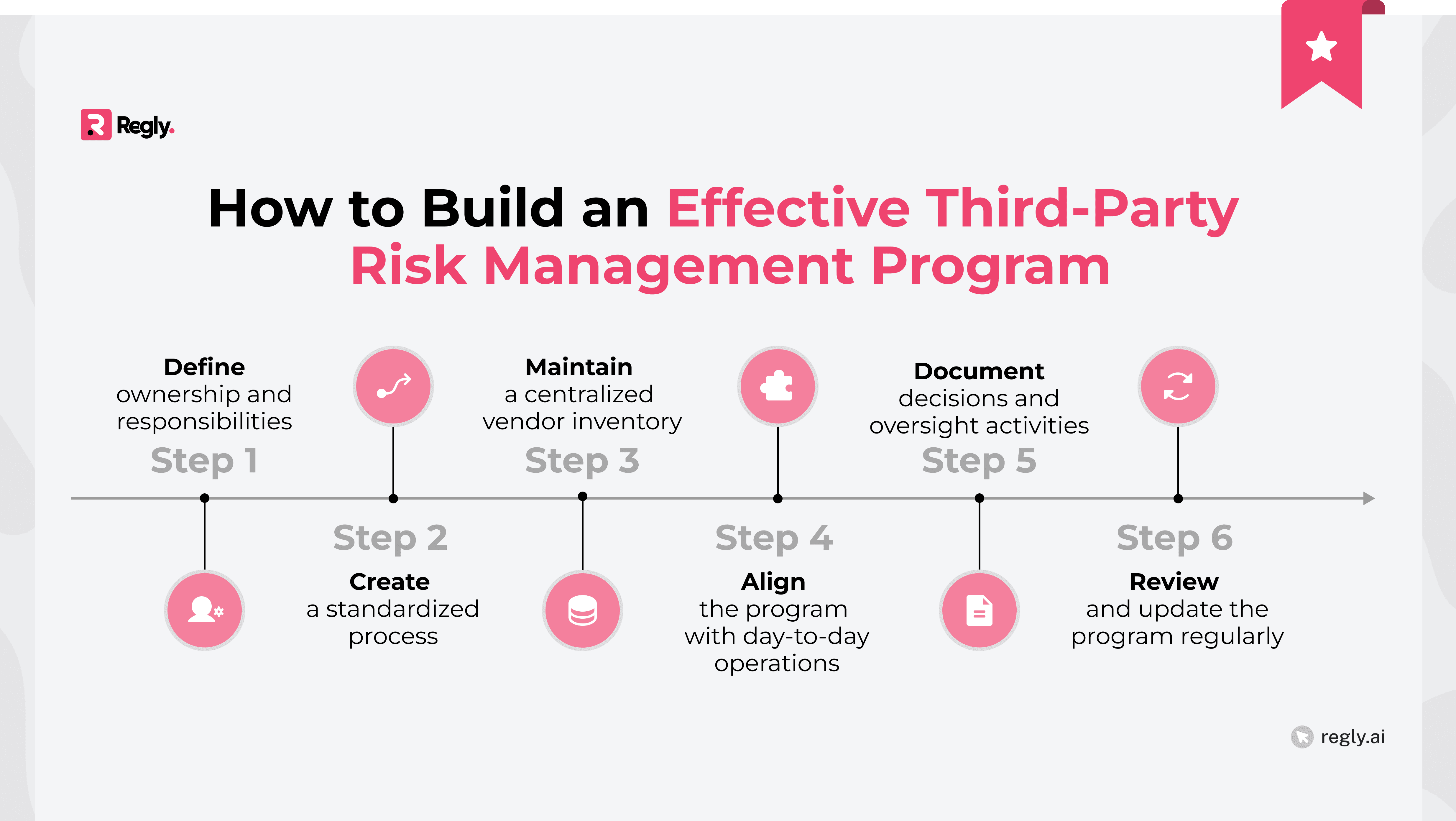
Define ownership and responsibilities: Assign clear ownership for vendor oversight. This could sit with compliance, legal, or a dedicated risk function, but roles should be well defined so nothing falls through the cracks.
Create a standardized process: Set a consistent approach for onboarding vendors, assessing risk, approving relationships, and monitoring performance. This makes the program easier to manage and easier to explain during reviews.
Maintain a centralized vendor inventory: Keep an up-to-date list of all vendors, along with their risk tier, services, and review status. This gives you a clear view of your exposure at any point in time.
Align the program with day-to-day operations: Your process should fit how your business runs. If vendor onboarding is frequent, the workflow needs to be practical and not slow teams down unnecessarily.
Document decisions and oversight activities: Keep records of risk assessments, approvals, and ongoing monitoring. This helps with internal tracking and shows regulators that your process is active and consistent.
Review and update the program regularly: As your business grows and vendor relationships change, your approach should evolve as well. Regular reviews help you catch gaps and improve how the program operates.
This kind of structure helps you stay organized while keeping vendor risk visible and manageable.
Common Third-Party Risk Management Challenges
Managing third-party risk sounds straightforward, but it can get complicated as your vendor base grows. Many firms run into the same set of challenges.
Lack of visibility across vendors: It’s common to have vendors spread across teams without a single source of truth. This makes it hard to track who you’re working with and what risk they introduce.
Inconsistent processes: Different teams may onboard and review vendors in different ways. This leads to gaps in due diligence and makes it difficult to compare risk across vendors.
Limited resources: Compliance and legal teams often handle vendor reviews alongside other responsibilities. This can slow things down or lead to lighter reviews than intended.
Keeping documentation up to date: Vendor information can quickly become outdated. Without a structured process, it’s easy to lose track of expired reports, missing documents, or changes in vendor operations.
Monitoring vendors over time: Initial due diligence is usually done well, but ongoing monitoring is where many programs fall short. Vendors change, and without regular check-ins, risk can go unnoticed.
Managing fourth-party risk: It’s not always clear who your vendors rely on. Getting visibility into subcontractors and their controls can be difficult, especially with larger providers.
These challenges are common, especially for growing fintech firms. Recognizing them early makes it easier to build a program that can handle them as you scale.
How Technology Supports Third-Party Risk Management
As vendor relationships grow, managing third-party risk manually becomes harder to maintain. Technology can help bring structure, consistency, and visibility across the entire process.
Centralized Vendor Management Systems
A centralized system helps you keep all vendor information in one place. Instead of tracking vendors across spreadsheets, emails, and shared drives, everything is organized and easy to access.
This usually includes your vendor list, risk tiers, documents, and review history. Having this in one system makes it easier to see your overall exposure and quickly find what you need.
It also helps with consistency. When everyone uses the same system, it’s easier to follow the same process across teams and avoid gaps in how vendors are managed.
Automated Risk Assessments and Workflows
As your vendor list grows, manual reviews can slow things down. Automation helps you move faster while keeping your process consistent.
You can set up workflows for onboarding, risk scoring, approvals, and periodic reviews. This reduces back-and-forth and makes it easier to track where each vendor stands.
It also helps reduce errors. When steps are standardized and built into a system, there’s less chance of missing a review or skipping a required check.
Ongoing Monitoring and Alerts
Keeping track of vendors over time can be difficult without the right setup. Monitoring tools help you stay updated on changes that could affect risk.
This can include alerts for security incidents, changes in financial status, expired documents, or updates to key controls. Instead of relying on manual check-ins, you get notified when something needs attention.
This makes it easier to respond quickly and keep your vendor data current. It also helps show that your oversight is active, not just something done during onboarding.
Audit Trails and Reporting
Clear records matter when you’re managing third-party risk. You need to show:
What was reviewed
When decisions were made
How vendors have been monitored over time
A good system keeps an audit trail of all key actions. This includes risk assessments, approvals, document updates, and ongoing reviews. Instead of searching through emails or shared folders, everything is tracked in one place.
Learn more about audit trails →
Reporting also becomes much easier. You can quickly pull summaries of vendor risk, outstanding reviews, or gaps that need attention.
Third-Party Risk and Regulatory Examinations
Third-party risk management is often reviewed during regulatory exams. Regulators want to see how well you understand your vendors and how you manage the risks they introduce.
What Regulators Typically Review
During an exam, regulators want to see how your vendor program actually works, not just how it looks on paper. They’ll usually focus on a few key areas.
Vendor inventory and risk tiering: They’ll check if you have a complete list of vendors and whether each one is properly classified based on risk.
Due diligence and onboarding records: Expect a review of how vendors were assessed before approval. This includes collected documents, risk scoring, and any follow-up actions.
Contracts and key terms: Regulators often look at whether contracts clearly define responsibilities, especially around data protection, compliance, and oversight.
Ongoing monitoring activities: They’ll want to see how you track vendor performance over time. This includes periodic reviews, updated documentation, and how issues are handled.
Issue tracking and escalation: If a vendor has had problems, regulators will check how those were documented and resolved. They’re looking for a clear response process.
Governance and oversight: This includes who is responsible for vendor management and how decisions are reviewed or approved within your firm.
The goal isn’t just to have documents. Regulators want to see that your process is active, consistent, and tied to how your business operates.
Documentation to Have Ready
When an exam starts, one of the first things you’ll be asked for is documentation. Having this organized ahead of time makes the process much smoother.
Vendor inventory: A current list of all vendors, including their services, risk tier, and status. This gives regulators a quick view of your overall exposure.
Risk assessments and due diligence files: Records showing how each vendor was reviewed before onboarding. This includes questionnaires, supporting documents, and risk scoring.
Contracts and agreements: Signed contracts with key terms clearly outlined, especially around data handling, responsibilities, and oversight.
Ongoing monitoring records: Evidence of periodic reviews, updated documents, and any follow-up actions taken over time.
Policies and procedures: Your internal guidelines for managing third-party risk. Regulators will compare what’s written here with what you’re actually doing.
Issue logs and remediation tracking: Documentation of any vendor-related issues and how they were handled. This shows that problems are tracked and addressed.
Keeping these materials up to date and easy to access can save a lot of time during an exam. It also shows that your program is organized and actively maintained.
—
Managing third-party risk is an integral part of doing business as a modern fintech company. Vendors power core functions, extend your capabilities, and help you move faster, but they also introduce risk that needs to be understood and managed over time.
The key is to stay structured and consistent. Know who your vendors are, understand what they do, assess their risk, and keep track of them as your business grows. Most issues come from gaps in visibility or follow-through, not from a lack of intent.
If your process is clear, documented, and aligned with how your team actually works, you’ll be better positioned for day-to-day operations and regulatory exams.
Ready to Get Started?
Schedule a demo today and find out how Regly can help your business.