Keeping up with regulatory changes is a constant challenge for fintech companies. New rules, enforcement actions, and guidance updates can come from multiple regulators at once, especially for firms operating across different products, states, or jurisdictions.
That pressure has pushed more compliance teams toward regulatory monitoring software. Instead of relying on inbox alerts and manual spreadsheets, firms are looking for tools that help track changes, organize reviews, assign follow-up actions, and maintain clear documentation.
This article covers what fintechs should look for in regulatory monitoring software, the features that matter most, and the common mistakes firms make when evaluating vendors.
What Is Regulatory Monitoring Software?
Regulatory monitoring software helps compliance teams track and manage regulatory developments that may affect their business. This can include:
Rule changes
Enforcement actions
Regulatory guidance
Examination priorities
Proposed regulations from federal and state agencies
Instead of manually reviewing regulator websites, newsletters, and legal updates every day, firms use these platforms to centralize regulatory information and organize internal review processes. Many systems also help teams assign tasks, document decisions, and track remediation work tied to specific regulatory changes.
Looking for an effective way to manage regulatory changes? Regly’s regulatory monitoring software helps fintech teams monitor updates, organize reviews, and keep compliance processes moving in one centralized platform →
Why Fintechs Need Regulatory Monitoring Software
Fintech companies face constant regulatory change across products, states, and agencies. As operations grow, tracking those developments manually becomes harder to manage and easier to overlook.
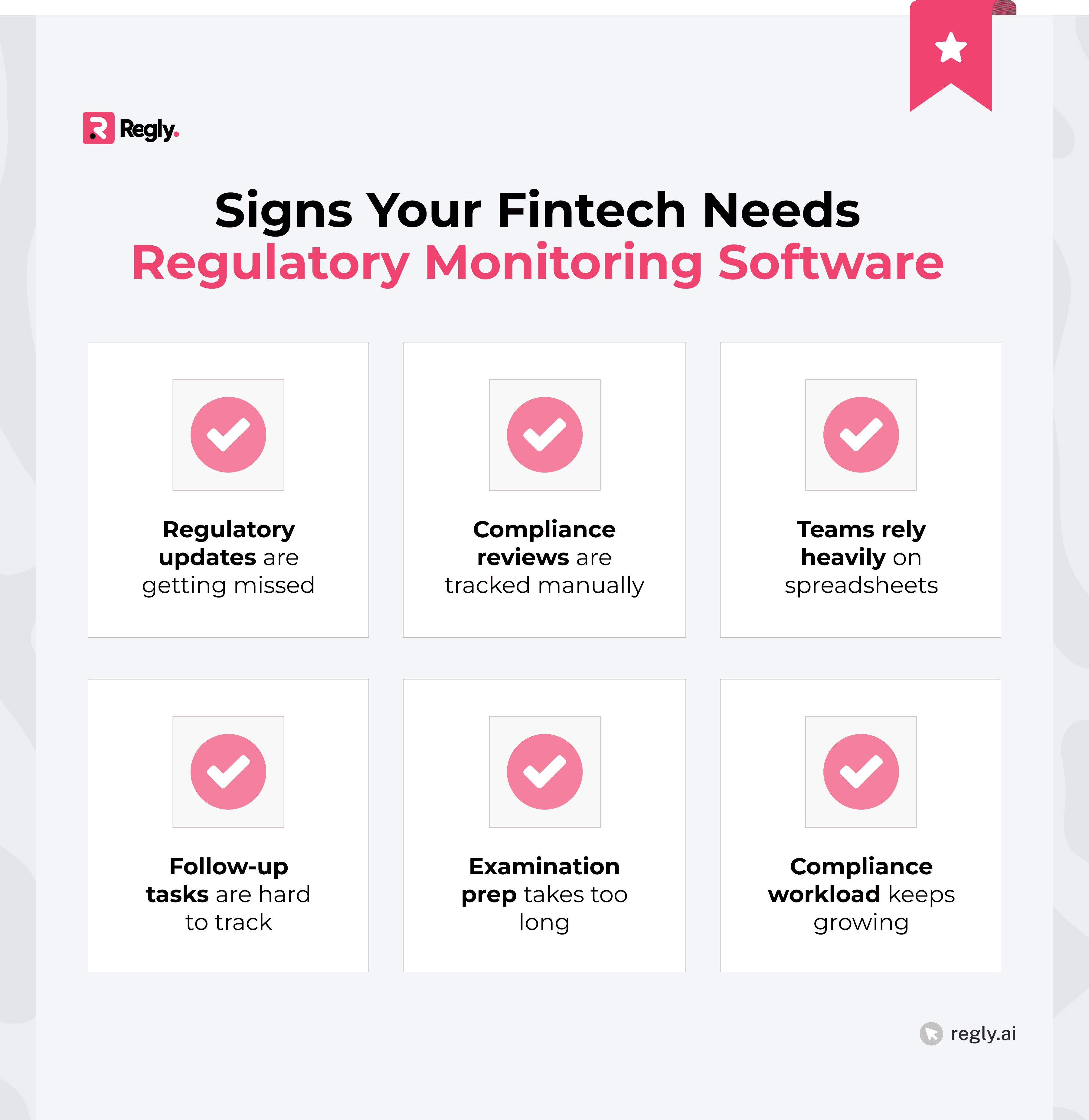
Here’s why many fintech companies rely on regulatory monitoring software:
Multiple regulators require ongoing oversight: A fintech may need to follow updates from the SEC, FINRA, CFPB, FinCEN, state agencies, and banking partners at the same time. Monitoring each source separately can consume significant time and create inconsistent review processes.
Manual tracking creates visibility gaps: Spreadsheet trackers, inbox alerts, and shared folders often make it difficult to see what has been reviewed, who owns an action item, or whether remediation steps were completed.
Examinations require documented processes: Regulators typically expect firms to show how compliance changes are reviewed and addressed internally. Strong documentation can help support examination readiness and internal accountability.
Regulatory changes affect multiple teams: Compliance updates may impact legal, operations, product, risk, and leadership teams. Centralized workflows make collaboration easier and reduce confusion around responsibilities.
Growth increases compliance complexity: Expanding into new products or jurisdictions usually adds more regulatory obligations. Many fintechs use monitoring platforms to build scalable compliance operations without depending entirely on additional headcount.
Who Uses Regulatory Monitoring Software?
Various fintech and financial services firms use regulatory monitoring software. While the day-to-day needs may vary from one company to another, the core challenge is usually the same: staying on top of regulatory changes and keeping compliance efforts organized internally.
1. Broker-Dealers
Broker-dealers operate in a highly regulated environment and often need to simultaneously manage requirements from the SEC, FINRA, and state regulators. That can challenge compliance teams that don’t have a structured process in place to stay current on rule changes, enforcement trends, exam priorities, and filing deadlines.
At the same time, many firms are handling a wide range of day-to-day compliance responsibilities, including advertising reviews, trade surveillance, AML programs, supervisory procedures, and books and records requirements. Regulatory monitoring platforms help bring those moving parts together by connecting new regulatory developments to internal workflows and improving documentation during audits and examinations.
2. RIAs and Investment Platforms
Registered investment advisors and investment platforms face ongoing pressure to keep up with changing regulatory expectations. Updates from the SEC, state regulators, and evolving fiduciary standards can all affect how firms manage disclosures, communications, and compliance oversight.
These firms also handle recurring compliance responsibilities tied to marketing reviews, cybersecurity, books and records, client communications, and internal testing. A centralized monitoring process makes it easier to:
Document reviews
Assign follow-up actions
Keep policy updates organized across the company
3. Payments and Money Transmitter Companies
Payment companies and money transmitters often deal with a combination of federal and state compliance obligations. That may include money transmission rules, AML requirements, licensing updates, consumer protection expectations, and guidance from banking partners or payment networks.
For businesses operating across multiple states, managing those requirements manually can quickly become time-consuming and difficult to scale. Monitoring platforms help compliance teams keep everything in one place, making it easier to review regulatory updates, manage deadlines, and maintain clear records of internal decisions and follow-up work.
4. Crypto and Digital Asset Firms
Crypto and digital asset companies often operate in one of the most uncertain regulatory environments in financial services. Guidance can shift quickly, and firms often need to follow developments across several regulators at the same time, including the SEC, CFTC, FinCEN, state agencies, and international authorities.
That level of uncertainty creates additional challenges for compliance teams trying to assess how new guidance may affect products, services, or operational workflows. Regulatory monitoring software helps organize those developments in a more structured way so teams can evaluate potential impacts and respond more efficiently.
Many crypto firms also deal with products or services that don’t fit neatly into traditional regulatory categories. Because of that, firms usually benefit from platforms built for fintech compliance workflows rather than generic enterprise monitoring tools designed for broader industries.
5. Banking-as-a-Service Providers
Banking-as-a-service providers sit at the center of several regulatory relationships at once. Many work closely with sponsor banks, fintech partners, payment processors, and third-party vendors, all of which may have different oversight expectations and compliance standards.
As regulations evolve, compliance teams need visibility into changes related to banking guidance, AML obligations, third-party risk management, consumer protection, and state-level requirements.
Regulatory monitoring software helps teams coordinate those efforts more effectively while creating a clearer process for documenting reviews, managing internal discussions, and tracking remediation work tied to new guidance or examination findings.
6. Embedded Finance and Lending Fintechs
Embedded finance and lending companies often launch products across multiple partners, platforms, and customer channels. As those offerings expand, firms also take on growing compliance responsibilities related to disclosures, servicing, fair lending, consumer protection, and state licensing requirements.
Regulatory expectations in lending can change quickly, especially when regulators focus on areas like fees, underwriting practices, marketing language, or customer communications. Compliance teams need a reliable way to stay informed and evaluate how those developments may affect existing products or workflows.
Regulatory monitoring software helps create more structure around that process by:
Centralizing updates
Assigning action items
Maintaining a clear record of decisions, reviews, and follow-up activities
Core Features to Look for in Regulatory Monitoring Software
Not all regulatory monitoring platforms offer the same level of functionality. Some tools focus mainly on alerts, while others support documentation, workflows, reporting, and ongoing compliance operations.
For fintech companies, the most useful platforms are usually the ones that help teams manage the full review process, not just collect regulatory updates.
1. Regulatory Change Tracking
Compliance teams need a reliable way to follow new developments, review their impact, and document internal responses without sorting through dozens of separate sources every day.
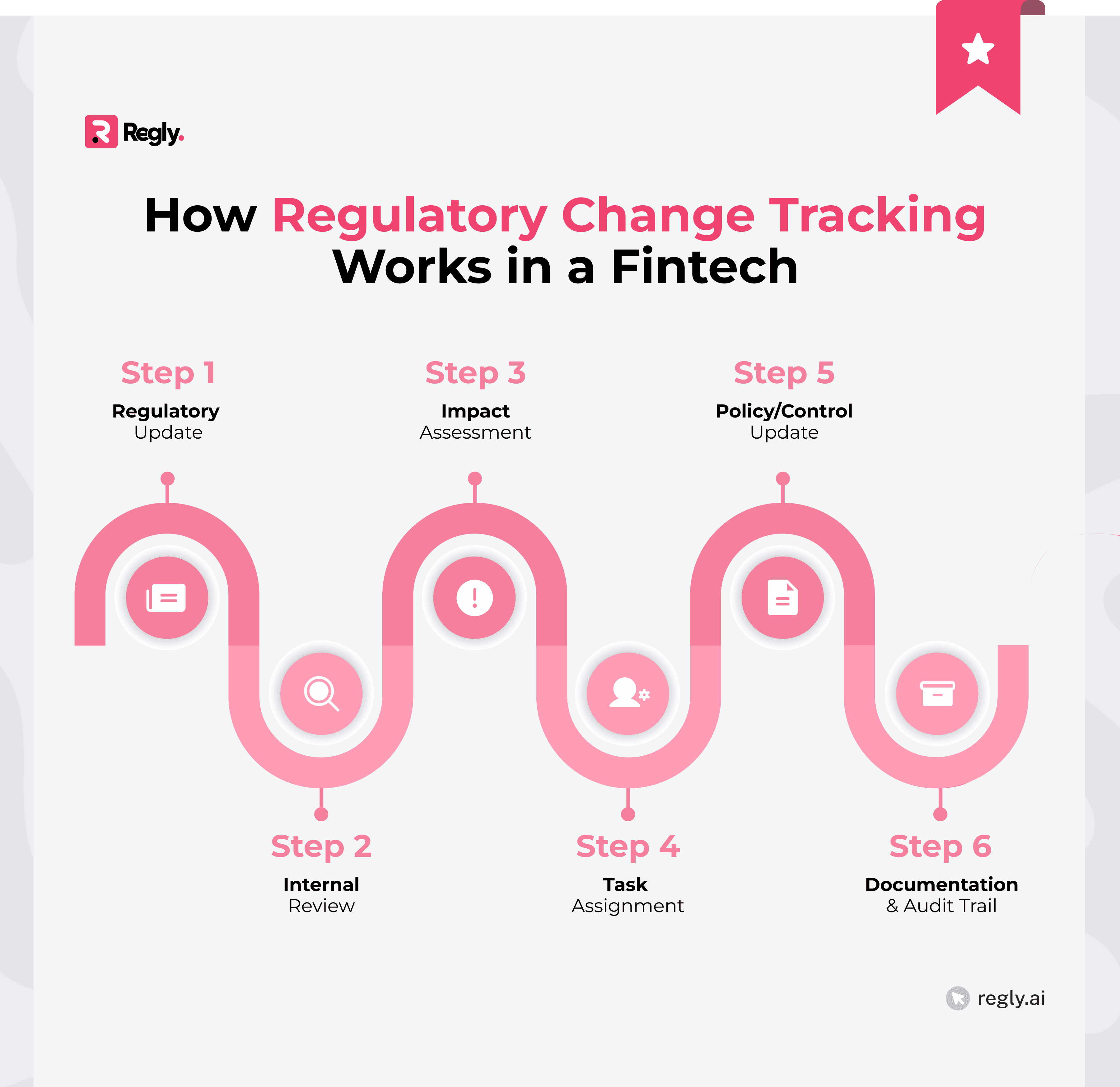
Strong platforms typically track several types of regulatory activity, including:
Rule changes: Regulatory changes can impact many parts of a business, from disclosures and supervisory procedures to reporting obligations, licensing requirements, and customer-facing processes. Monitoring software helps compliance teams spot relevant updates early and route them to the right people internally for review and action.
Enforcement actions: Enforcement actions often provide insight into the areas regulators are paying the closest attention to. Compliance teams may review these cases to better understand current risks, identify patterns across the industry, and determine whether internal policies or controls need to be updated.
Regulatory guidance: Firms also monitor guidance from regulators, even when formal rules have not changed. This can include examination priorities, risk alerts, interpretive statements, FAQs, speeches, or other public communications that help clarify regulatory expectations and industry focus areas.
Proposed rules and comment periods: Many fintech companies track proposed regulations before they are finalized. Having early visibility gives legal and compliance teams more time to assess potential business impacts, prepare for operational changes, and participate in industry comment periods when appropriate.
Keeping up with regulatory changes manually can quickly become overwhelming. Regly helps compliance teams centralize updates, manage reviews, and track follow-up actions more efficiently. Click here to learn more about Regly Monitor →
2. Coverage Across Regulators and States
Fintech companies rarely answer to just one regulator. That’s why regulatory coverage matters. A platform may work well for traditional financial institutions but still offer limited visibility into state licensing updates, digital asset guidance, or fintech-specific enforcement activity.
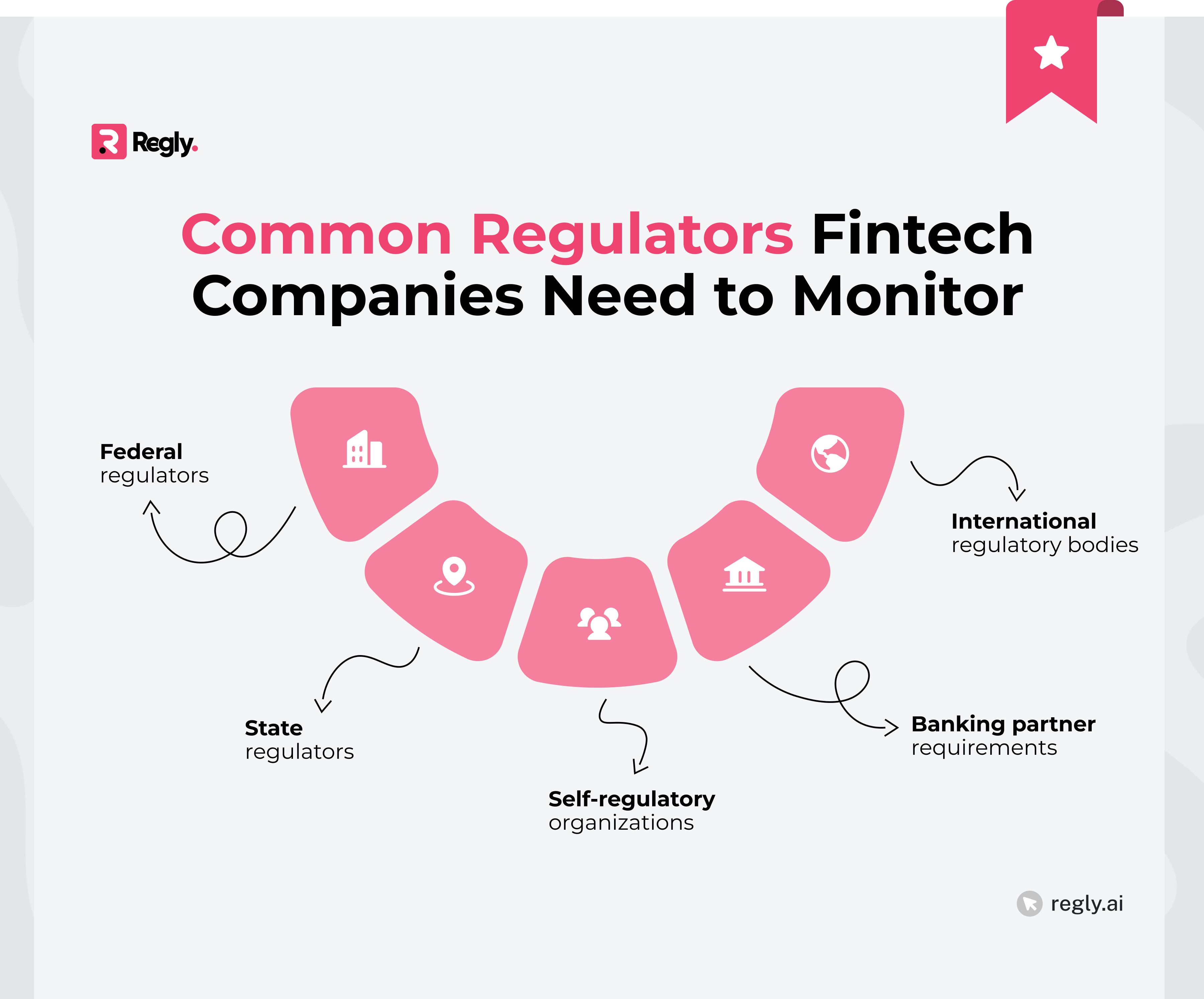
When evaluating regulatory monitoring software, firms should look closely at the depth of coverage across agencies, jurisdictions, and business lines. This is especially important for companies operating across multiple states or offering products that fall into more than one regulatory category.
3. AI and Automation Features
Many regulatory monitoring platforms now use AI and automation to help compliance teams sort through large volumes of regulatory updates more efficiently. One common feature is relevance scoring, where the system highlights updates that may be more important based on the firm’s business model, products, jurisdictions, or risk areas.
This can help reduce noise and make review queues easier to manage. Instead of treating every update the same way, teams can focus first on developments that are more likely to affect their operations or compliance obligations.
Some platforms also automate tagging, categorization, summaries, or workflow routing. While these features can save time, firms should still review how the system validates information and how much human oversight is involved in the process.
4. Workflow and Task Management
Tracking regulatory updates is only one part of the process. Compliance teams also need a practical way to assign reviews, manage follow-up actions, and document what was completed and when.
Workflow and task management features help firms stay organized as regulatory obligations grow. Teams can assign action items, set deadlines, track remediation work, and keep a record of internal decisions without relying on scattered emails or manual trackers.
This becomes especially useful when compliance reviews involve several departments. Legal, operations, product, and compliance teams may all need visibility into the same regulatory development and its related action items.
5. Policy and Control Mapping
Regulatory updates often affect more than one part of a compliance program. A new rule or guidance update may require changes to policies, supervisory procedures, internal controls, training materials, or customer communications.
Policy and control mapping features help teams connect regulatory developments to the specific processes or documents affected by the change. This gives compliance teams a clearer way to track what needs to be reviewed, updated, or escalated internally.
For growing fintech companies, this can also make compliance operations easier to manage over time. Instead of treating regulatory updates as isolated tasks, teams can build more structured review processes tied to actual business functions and controls.
6. Audit Trails and Documentation
Good documentation matters during examinations, audits, and internal reviews. Compliance teams need to show not only what regulatory changes were identified, but also how those updates were reviewed and addressed internally.
Learn more about document management →
Similarly, audit trail features help firms maintain a clear record of actions taken over time. This can include review notes, assigned tasks, approvals, policy updates, remediation steps, and timestamps tied to specific regulatory developments.
Learn more about audit trails →
For fintech companies managing fast-moving operations, having that information centralized can make regulatory reviews much easier to navigate and reduce the need to piece together records from different systems later on.
7. Search, Filtering, and Categorization
As regulatory updates start to pile up, finding the right information quickly becomes just as important as collecting it. Compliance teams often need to sort updates by regulator, topic, jurisdiction, business line, risk area, or review status.
Strong search and filtering features make that process much easier. Instead of digging through long lists of alerts or emails, teams can quickly focus on the updates that actually matter to their role or business function.
Categorization tools also help firms stay more organized over time. For example, a payments company may want to separate AML-related updates from licensing developments or consumer protection guidance so reviews are easier to manage internally.
8. Collaboration Features for Legal and Compliance Teams
Regulatory reviews often involve more than just the compliance department. Legal teams, operations staff, product managers, and leadership teams may all need to review updates or weigh in on potential business impacts.
Collaboration features help keep those conversations organized. Teams can share notes, assign responsibilities, track approvals, and manage discussions in one place instead of relying on long email threads or disconnected spreadsheets.
This becomes especially helpful for fintech companies launching new products or entering new jurisdictions, where several teams may need to review the same regulatory development from different angles.
9. Reporting and Dashboard Capabilities
Compliance teams often need a clear way to track regulatory activity, review progress, and outstanding action items across the organization. Reporting and dashboard features help bring that information together in one place.
Dashboards can give teams visibility into open reviews, overdue tasks, policy updates, remediation efforts, and trends tied to certain regulators or risk areas. This makes it easier for compliance leaders and management teams to monitor ongoing activity without digging through separate trackers or emails.
Reporting tools can also support examinations and internal meetings by helping firms pull together documentation, review histories, and status updates more efficiently.
Looking for a more organized way to manage regulatory updates? Regly helps fintech compliance teams stay ahead of rule changes as regulatory expectations evolve. Explore Regly’s monitoring platform →
Questions to Ask Before Choosing Regulatory Monitoring Software
Not every regulatory monitoring platform is built for fintech operations. Before selecting a vendor, firms should look closely at how the system handles coverage, workflows, reporting, and ongoing compliance management in real-world environments.
Which Regulators and Jurisdictions Are Covered?
Regulatory coverage should be one of the first things a fintech company reviews when evaluating a monitoring platform. Some tools focus heavily on federal regulators but offer limited visibility into state-level developments or fintech-specific guidance.
That can become a problem for firms operating across multiple products or jurisdictions. A payments company, for example, may need coverage across state money transmitter regulators, FinCEN, the CFPB, and banking partner requirements at the same time.
It’s also worth asking how the platform handles newer areas of regulation, including digital assets, embedded finance, and evolving consumer protection expectations. Broader coverage is helpful, but relevance and depth matter just as much.
How Frequently Is Data Updated?
Regulatory updates move quickly, especially during periods of increased enforcement activity or rulemaking. Delayed information can make it harder for compliance teams to respond to changes on time or assess potential business impacts early.
When evaluating a platform, firms should ask how often regulatory data is refreshed and how updates are reviewed before they appear in the system. Some vendors provide near real-time updates, while others rely on scheduled refresh cycles or third-party feeds.
It’s also helpful to understand whether the platform highlights material changes or simply pushes large volumes of alerts without prioritization. Too much noise can make important developments harder to spot.
Can the System Support Multiple Business Lines?
Many fintech companies operate across more than one product or regulatory category. A single firm may offer payment services, lending products, crypto features, or investment tools at the same time, each with different compliance obligations.
Because of that, regulatory monitoring software should be flexible enough to support multiple business lines without creating disconnected workflows. Teams should be able to organize updates by product, regulator, jurisdiction, or risk area so reviews stay relevant and manageable.
This is especially important for growing fintechs. A platform that works for one business unit today may become difficult to manage later if the company expands into new products or markets.
How Customizable Are Workflows and Reporting?
Every fintech company handles compliance operations a little differently. Some firms need simple review workflows, while others require layered approvals, cross-functional reviews, or detailed documentation tied to examinations and audits.
That’s why workflow flexibility matters. Compliance teams should be able to customize task assignments, review stages, reporting views, and escalation processes based on how the business actually operates.
Reporting flexibility is just as important. Different teams may need different levels of visibility, from high-level dashboards for leadership to detailed audit records for compliance and legal teams.
What Implementation Resources Are Required?
Before choosing a vendor, fintech companies should understand how much internal time and support will be needed during implementation.
That includes questions around onboarding, workflow configuration, user management, reporting setup, and data organization. Firms should also ask whether the platform requires dedicated technical resources or if compliance teams can manage most functions directly.
For smaller compliance teams, ease of use can make a big difference. A system that is difficult to maintain may create more operational work instead of reducing it.
How Does the Vendor Handle Regulatory Source Validation?
Not all regulatory updates carry the same level of accuracy, context, or relevance. Some platforms rely heavily on automated aggregation, which can lead to duplicate alerts, missing context, or low-quality results that still need significant manual review.
It’s important to understand where the platform sources its regulatory data and how that information is reviewed before reaching compliance teams. Some vendors combine automation with human review processes to improve accuracy and relevance, especially for complex fintech regulatory developments.
Firms should also ask how the platform handles conflicting updates, outdated guidance, or regulator corrections over time. Clear sourcing and validation processes can make compliance reviews much more reliable.
Red Flags To Watch For When Choosing Regulatory Monitoring Software
Some regulatory monitoring platforms look strong during demos but create operational issues once teams start using them day-to-day. Knowing what to watch for early can help fintech companies avoid tools that add complexity instead of improving compliance workflows.
Generic Compliance Platforms With Limited Fintech Expertise
Some compliance platforms are designed for broad enterprise use and may not fully support the realities of fintech operations. They often cover general compliance workflows well but provide limited visibility into fintech-specific regulatory issues, state licensing requirements, or newer business models tied to digital assets and embedded finance.
This can create gaps for firms operating across multiple regulators, products, or jurisdictions. A platform may look comprehensive at first, but still requires significant manual work to track the regulatory developments that matter most to fintech companies.
Platforms That Only Aggregate News Alerts
Some platforms mainly function as news aggregators. They collect regulatory headlines and updates but offer very little support for review workflows, documentation, or internal follow-up processes.
That may work for basic monitoring, but it often creates extra manual work for compliance teams. Firms still need separate systems to assign tasks, track remediation efforts, document decisions, and manage examination records.
For fintech companies dealing with multiple regulators and fast-moving operations, alerts alone are usually not enough. The bigger challenge is managing what happens after a regulatory update is identified.
Weak Documentation and Reporting Capabilities
Documentation becomes especially important during examinations, audits, and internal reviews. If a platform cannot clearly show how regulatory updates were reviewed, assigned, and resolved, compliance teams may end up rebuilding that information manually later.
Weak reporting features can also make it harder to track outstanding action items, remediation efforts, or policy changes across the organization. Over time, that lack of visibility can create confusion around ownership and follow-up responsibilities.
Fintech companies should look for platforms that make documentation easy to maintain and reporting easy to understand, especially as compliance operations grow more complex.
Limited State Regulatory Coverage
State-level requirements are a major part of compliance for many fintech companies, especially payments firms, lenders, money transmitters, and crypto businesses. Yet some regulatory monitoring platforms focus mostly on federal agencies and provide only limited coverage across state regulators.
That can leave compliance teams with visibility gaps, particularly when licensing rules, examination priorities, or enforcement activity vary from one state to another. Firms may still need to manually track updates from individual state agencies, which increases operational workload.
For fintech companies operating nationally, strong state coverage is often just as important as federal regulatory monitoring.
Overreliance on AI Without Human Oversight
AI features can help compliance teams sort, categorize, and prioritize regulatory updates more efficiently. But platforms that rely too heavily on automation without meaningful human review can create problems, especially in complex regulatory areas where context matters.
A regulatory update may look irrelevant at first glance, but it still carries important operational or examination implications. Automated summaries and relevance scores can be useful, but they should support compliance teams, not replace critical review processes.
Fintech companies should look for platforms that balance automation with strong regulatory expertise and clear review workflows.
Regulatory Monitoring Software vs. Manual Monitoring: Key Differences
Many fintech companies start with manual regulatory monitoring processes. Teams rely on spreadsheets, inbox folders, regulator websites, and shared documents to track updates and assign reviews. That approach may work early on, but it often becomes harder to manage as regulatory obligations grow.
Here is how the two approaches typically compare as compliance operations become more complex:
Aspect | Manual Monitoring | Regulatory Monitoring Software |
|---|---|---|
Regulatory tracking | Teams manually check websites, emails, and newsletters | Updates are centralized in one platform |
Task management | Follow-ups are tracked through emails or spreadsheets | Tasks, deadlines, and ownership are managed within workflows |
Documentation | Review records may be scattered across systems | Actions and decisions are logged in one place |
Visibility | Limited visibility into outstanding reviews or remediation work | Dashboards help teams track progress and open items |
Scalability | Processes become harder to manage as the business grows | Workflows are easier to maintain across larger operations |
State coverage | Teams may need to monitor individual state regulators separately | Many platforms consolidate multi-state monitoring |
Audit readiness | Preparing records for examinations can take significant manual effort | Documentation is easier to retrieve and organize |
That doesn’t mean every fintech company needs a highly complex system right away. But as firms expand into new products, states, or regulatory categories, manual processes often become difficult to maintain consistently over time.
How Regulatory Monitoring Software Supports Examinations and Audits
Regulatory monitoring software can help firms build more organized and defensible compliance processes during examinations and audits. Common benefits include:
Building documented review processes: Compliance teams can maintain records showing when regulatory updates were reviewed, who handled them, and what actions were taken internally.
Demonstrating ongoing compliance oversight: Regulators often want to see evidence that firms actively monitor regulatory developments instead of reviewing issues only during examinations or audits.
Tracking remediation and follow-up actions: Platforms can help teams assign tasks, manage deadlines, and document remediation work tied to regulatory changes, internal findings, or examination feedback.
Supporting audit trails and historical records: Centralized documentation makes it easier to retrieve review histories, approvals, policy updates, and action logs when regulators request supporting materials.
Improving visibility across teams: Dashboards and reporting tools help compliance leaders track outstanding reviews, open action items, and workflow status across the organization.
Preparing for SEC, FINRA, CFPB, and state examinations: Organized records and structured workflows can help firms respond to regulator requests more efficiently during examinations and ongoing supervisory reviews.
Common Mistakes Fintechs Make When Evaluating Regulatory Monitoring Software
Fintech companies often focus heavily on alerts and dashboards during vendor evaluations, but the long-term challenges usually come from workflow management, documentation, and operational fit. A platform may look impressive during a demo and still create friction once teams begin using it daily.
Some of the most common evaluation mistakes include:
Focusing only on alerts instead of workflows: Regulatory updates are only one part of the process. Firms also need tools for assigning reviews, documenting decisions, tracking remediation work, and managing follow-up actions across teams.
Ignoring state regulatory requirements: Many fintech businesses operate across several states, especially in payments, lending, and digital assets. Platforms with weak state-level coverage can leave compliance teams filling gaps manually.
Buying generic enterprise tools: Some systems are built for broad corporate compliance use and may not align well with fintech regulatory operations. This can create extra manual work when handling fintech-specific obligations or multi-regulator oversight.
Failing to involve compliance teams early: Purchasing decisions are sometimes driven mainly by leadership or procurement teams. Without input from the people managing daily compliance operations, firms may end up with workflows that don’t match practical needs.
Underestimating implementation and governance: Even strong platforms require setup, ownership, and ongoing management. Firms should think through onboarding, workflow design, user permissions, reporting structures, and internal governance before rollout begins.
—
Regulatory monitoring has become a much bigger operational challenge for fintech companies. Firms are dealing with overlapping regulators, faster rule changes, growing examination expectations, and increasingly complex product structures.
Manual processes may work for a period of time, but they often become difficult to manage as compliance obligations expand.
The right regulatory monitoring software helps teams stay organized, document reviews more clearly, manage follow-up actions, and maintain better visibility across compliance operations.
Ready to Get Started?
Schedule a demo today and find out how Regly can help your business.