Policy version control is one of those compliance areas that often gets overlooked until an audit or regulator asks a simple question: Which version of your policy was in effect at this time?
In financial services, being able to answer that question clearly is not optional. It sits at the core of how firms demonstrate oversight, governance, and accountability.
For fintechs, the challenge is sharper. Products evolve quickly, regulatory expectations shift, and policies need to keep up. Without a structured approach to policy version control, teams end up relying on scattered documents, unclear approvals, and inconsistent updates. That creates gaps between what the firm says it does and what it can actually evidence.
This article explains how policy version control works in a compliance context, what regulators expect, and how to approach transparency in a practical way. It focuses on real-world implementation, common pitfalls, and how to build a process that holds up under regulatory scrutiny.
What Is Policy Version Control in Compliance?
Policy version control refers to the structured process of tracking, managing, and maintaining different versions of compliance policies over time. It captures what changed, when it changed, and who approved it, along with which version was in effect at any given point.
In a compliance context, this is not just document tracking. It is part of how a firm demonstrates governance. Regulators expect firms to show that policies were reviewed, updated, and applied as the business evolved.
Policy version control and general document versioning are frequently confused, and the difference matters. Document versioning is about tracking edits. Policy version control is about tracking compliance decisions.
A shared drive with multiple “final” documents may technically store versions. But it does not show who approved a policy, why it changed, or whether employees relied on the correct version.
Aspect | Document Versioning | Policy Version Control |
|---|---|---|
Purpose | Track edits to a file | Track regulatory and governance changes |
Focus | Content changes | Approval, oversight, and effective dates |
Ownership | Any contributor | Compliance, legal, or leadership |
Audit relevance | Limited | High |
In regulated environments, policies are not static documents. They are part of the firm’s control framework.
Policy version control acts as evidence that a compliance program is active and maintained, not just documented. It connects written policies to actual oversight, testing, and updates.
For example, a broker-dealer updates supervisory procedures after a new product launch and an RIA revises its compliance manual following an annual review. Without version control, these updates are difficult to prove. With it, firms can show a clear timeline of changes and decisions.
This is why policy version control is often examined alongside recordkeeping, supervision, and internal controls. It is not a back-office task. It is part of how compliance is evaluated in practice.
Read our guide to policy management for a broader overview of how policies are structured and maintained →
Why Policy Version Control Matters in Financial Services
Regulators do not evaluate policies in isolation. They look at how policies evolve, how they are applied, and whether the firm can demonstrate that evolution over time. That is where policy version control becomes relevant.
Policy version control supports audit readiness by creating a clear record of how a firm’s compliance framework has changed. When an examiner asks what procedures were in place during a specific period, the answer needs to be precise and backed by documentation.
Across SEC, FINRA, and AML frameworks, firms are expected to maintain written policies and keep them current. That expectation goes beyond having a document on file.
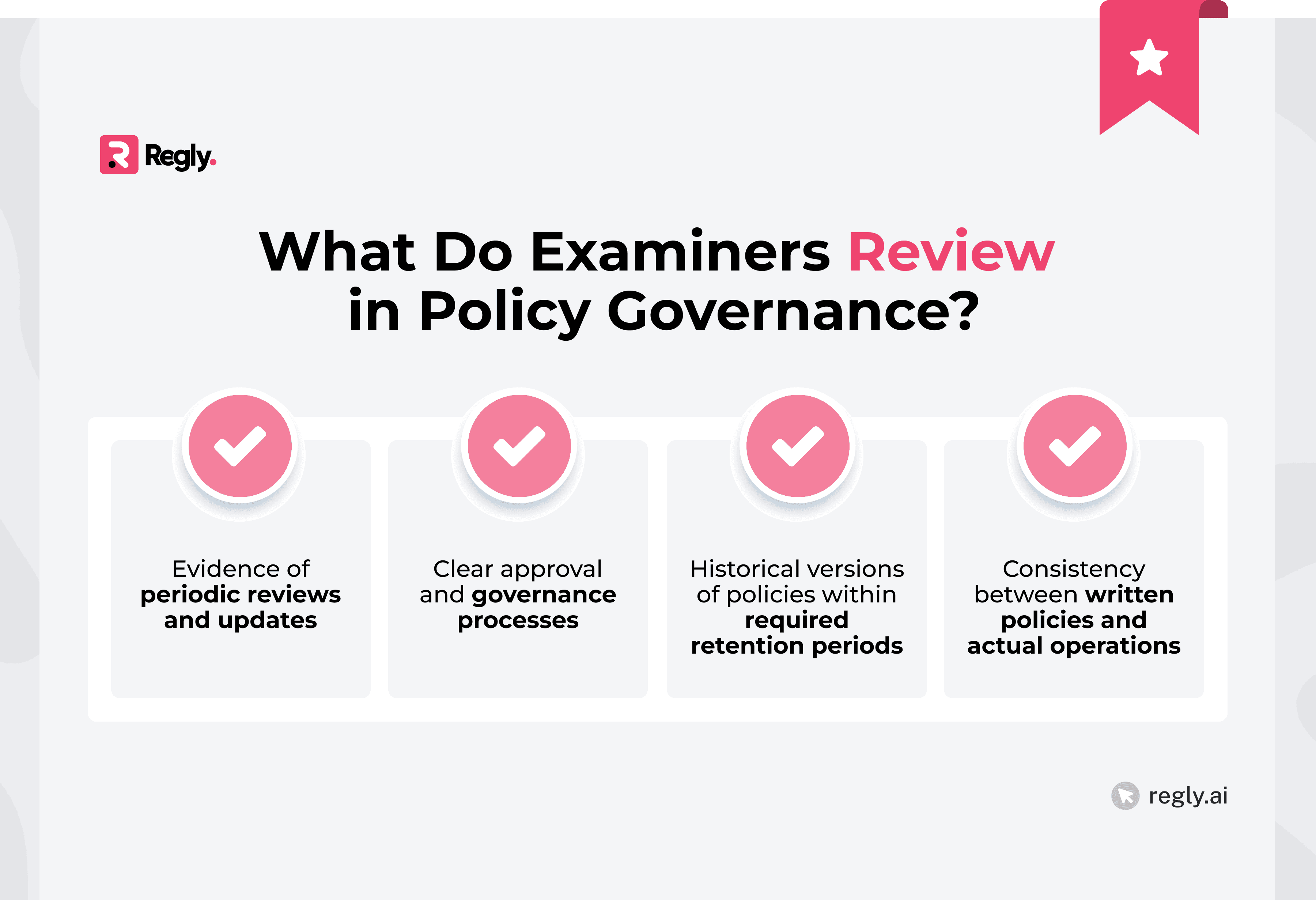
If a firm cannot show prior versions or explain changes, it raises questions about oversight.
This is especially true for fintechs as they operate in a different environment than traditional financial institutions. Product development cycles are shorter, and regulatory interpretations shift more frequently.
Policy version control becomes harder as the pace of change increases. A single product update may impact multiple policies, from AML procedures to disclosures and supervisory workflows.
Managing the full lifecycle of compliance policies in a controlled way sits at the heart of policy version control.
That’s where Regly’s policy management module can lift the burden of keeping up with frequent updates and meeting complex regulatory requirements. It helps centralize policies, track changes, and maintain a clear audit trail so compliance teams can operate with better visibility.
Regulators and Policy Version Control
Policy version control is not explicitly labeled as a standalone requirement in most regulations. Instead, it sits across multiple rules that require firms to maintain written policies, update them over time, and retain prior versions for review.
SEC Expectations for Written Policies and Procedures
The United States Securities and Exchange Commission (SEC) requires registered advisors to adopt and implement written compliance policies and procedures. These policies must be reviewed periodically and updated as the business and regulatory landscape changes.
The key expectation is being able to show how and when policies were updated. This includes maintaining records of previous versions and documenting the review process.
For example, during an SEC exam, firms may be asked:
What version of the compliance manual was in effect during a specific period
When the last review occurred, and what changes were made
Who approved the updates
Without structured policy version control, these questions are difficult to answer with confidence.
FINRA Supervisory Procedures and Documentation Requirements
The Financial Industry Regulatory Authority (FINRA) requires broker-dealers to maintain written supervisory procedures that reflect how the firm supervises its business. These procedures must evolve as the firm’s activities change.
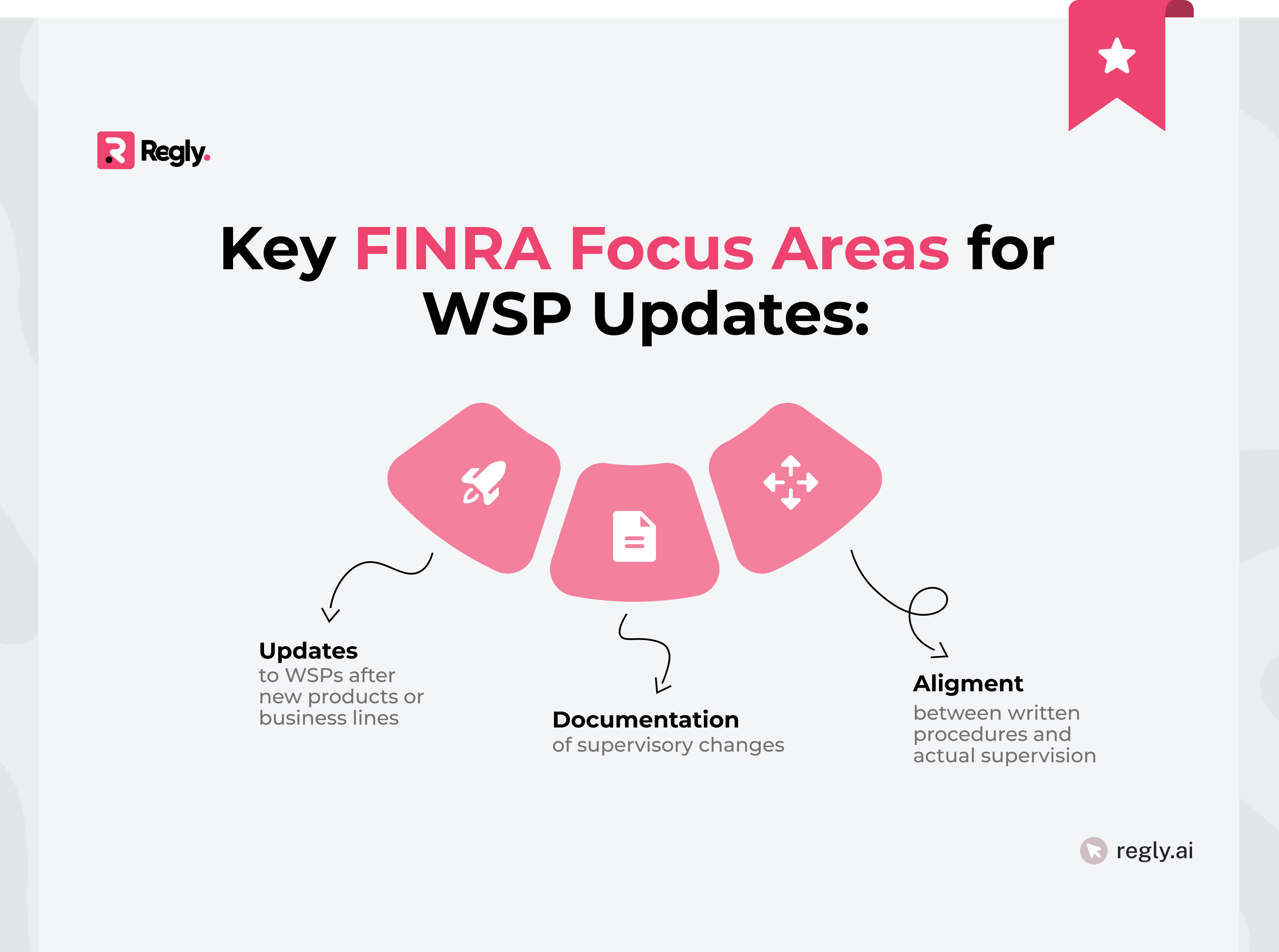
FINRA focuses on whether procedures are current and actually followed in practice. This creates pressure to maintain accurate, version-controlled supervisory documents.
A static document does not meet this expectation. Firms need a clear record of updates and approvals over time.
This becomes particularly relevant for policies that require frequent updates, such as gifts and entertainment policies, where thresholds and reporting expectations may change over time.
Learn more about gifts and entertainment policies →
FinCEN and AML Program Documentation Requirements
The Financial Crimes Enforcement Network (FinCEN) requires financial institutions to maintain a written AML program that reflects their risk profile. This program must be updated as risks change.
AML policies are expected to be risk-based and responsive to new threats, which makes version control essential. Each update should reflect a specific risk assessment or regulatory development.
Firms that cannot show how their AML program evolved may face questions about whether the program is reasonably designed.
Read our Beginner’s Guide to Fintech AML Compliance →
State Regulators and Cybersecurity Policies
State regulators, particularly those focused on cybersecurity, require firms to maintain written policies that are reviewed and approved regularly.
Cybersecurity policies often change more frequently than other compliance documents, making policy version control a practical necessity. Updates may be driven by incidents, vendor changes, or new regulatory expectations.
Key expectations typically include:
Annual approval of cybersecurity policies by senior leadership
Documentation of updates following incidents or risk assessments
Clear linkage between policy changes and operational controls
In these areas, policy version control is closely tied to incident response and governance. Regulators expect firms to show not just what policies exist, but how they adapt over time.
Where Policy Version Control Appears in Regulations
Policy version control is rarely called out directly in regulatory text. Instead, it is embedded across requirements that deal with written policies, periodic reviews, and recordkeeping.
Investment Advisor Compliance Programs
Registered advisors are expected to maintain written compliance policies and revisit them regularly. These reviews are meant to assess both the strength of the policies and how they are applied in day-to-day operations.
Policy version control helps document that process by capturing each stage of policy development and revision. It creates a clear record of how policies have evolved in response to changes in the business, new regulatory expectations, or internal findings.
Over time, firms need to show that reviews occurred, that updates were made when needed, and that earlier versions were retained for reference. Without this level of tracking, it is harder to explain how a firm managed its compliance framework.
Regly helps Registered Investment Advisors centralize oversight and produce exam-ready evidence →
Broker-Dealer Written Supervisory Procedures (WSPs)
Broker-dealers must maintain written supervisory procedures that reflect how the firm supervises its activities. These procedures are expected to change as the business evolves.
Policy version control helps track how supervisory procedures are updated in response to new products, risks, or regulatory expectations. It provides a structured record of changes and approvals.
Typical use cases include:
Updating WSPs after launching a new product or service
Revising supervisory steps following internal testing or findings
Aligning procedures with new regulatory guidance
Firms that rely on static documents often struggle to show when and why supervisory procedures changed.
Regly helps broker-dealers establish an efficient version control process and provide audit-ready evidence →
AML Programs and Risk-Based Updates
AML programs are designed to reflect a firm’s risk profile, which means they are expected to change as that profile evolves. As new risks emerge or business models shift, policies need to be updated to stay aligned with those realities.
Policy version control helps tie those updates back to specific drivers. It creates a record showing how changes in customer behavior, transaction patterns, or regulatory expectations led to adjustments in the AML framework.
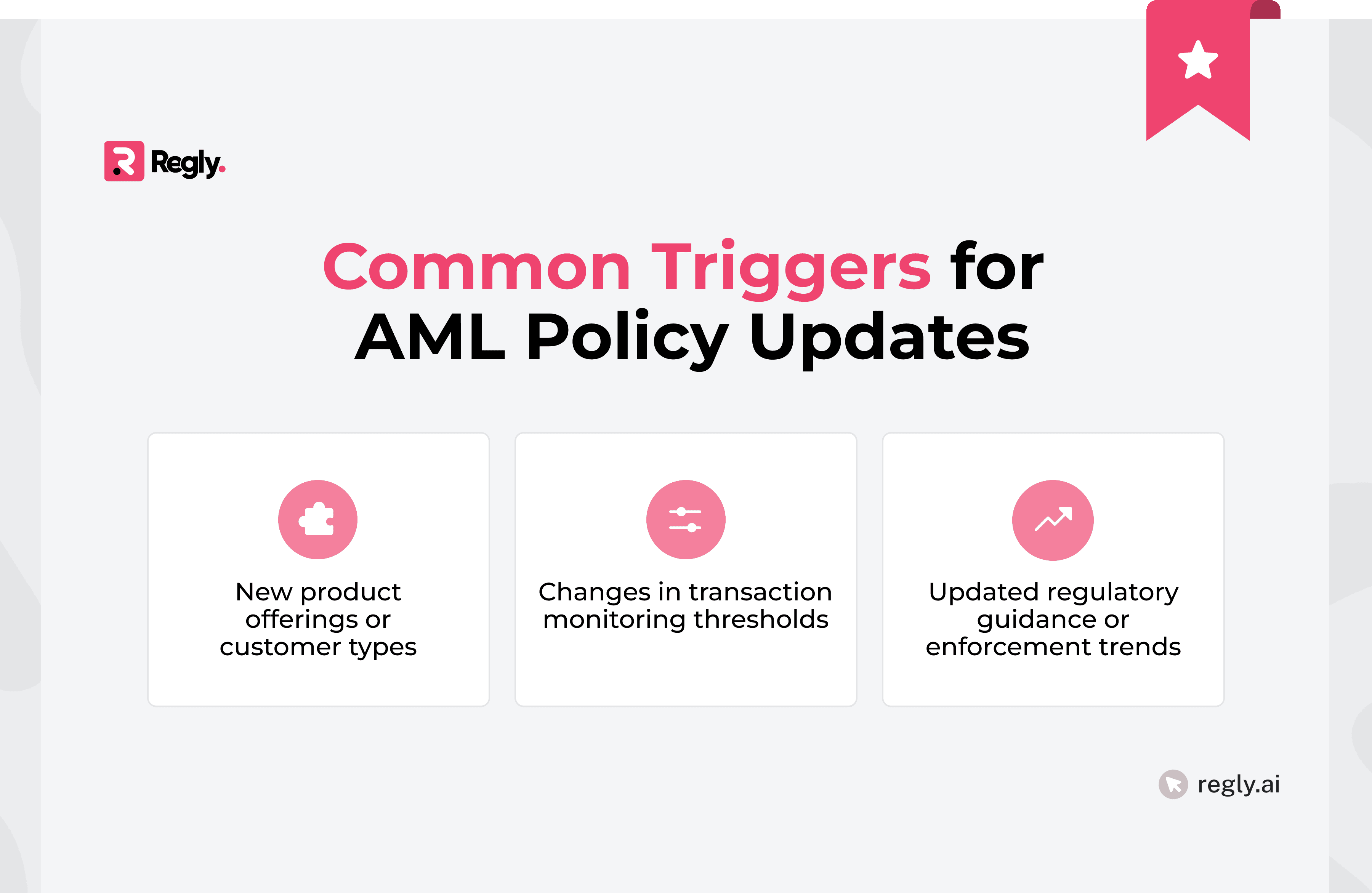
In practice, updates often follow the introduction of new products, changes in monitoring logic, or regulatory guidance highlighting new risk areas. This connection between risk and policy changes is something examiners regularly review.
Learn how to create an effective AML compliance program →
Cybersecurity and Incident Response Policies
Cybersecurity and incident response policies are closely tied to how a firm operates on a day-to-day basis. As systems change or incidents occur, these policies need to be updated to reflect current practices.
Policy version control plays a key role by capturing those updates and linking them to the events that triggered them. It provides a record of how policies evolved following risk assessments, operational changes, or new regulatory expectations.
This visibility is important during examinations, where regulators assess whether policy updates reflect actual risks and whether those updates were formally reviewed and approved.
Core Elements of an Effective Policy Version Control
Policy version control works when it is structured and consistent. Without clear components, even well-written policies become difficult to track, review, and evidence.
Effective policy version control is built on a few core elements that create traceability across the policy lifecycle:
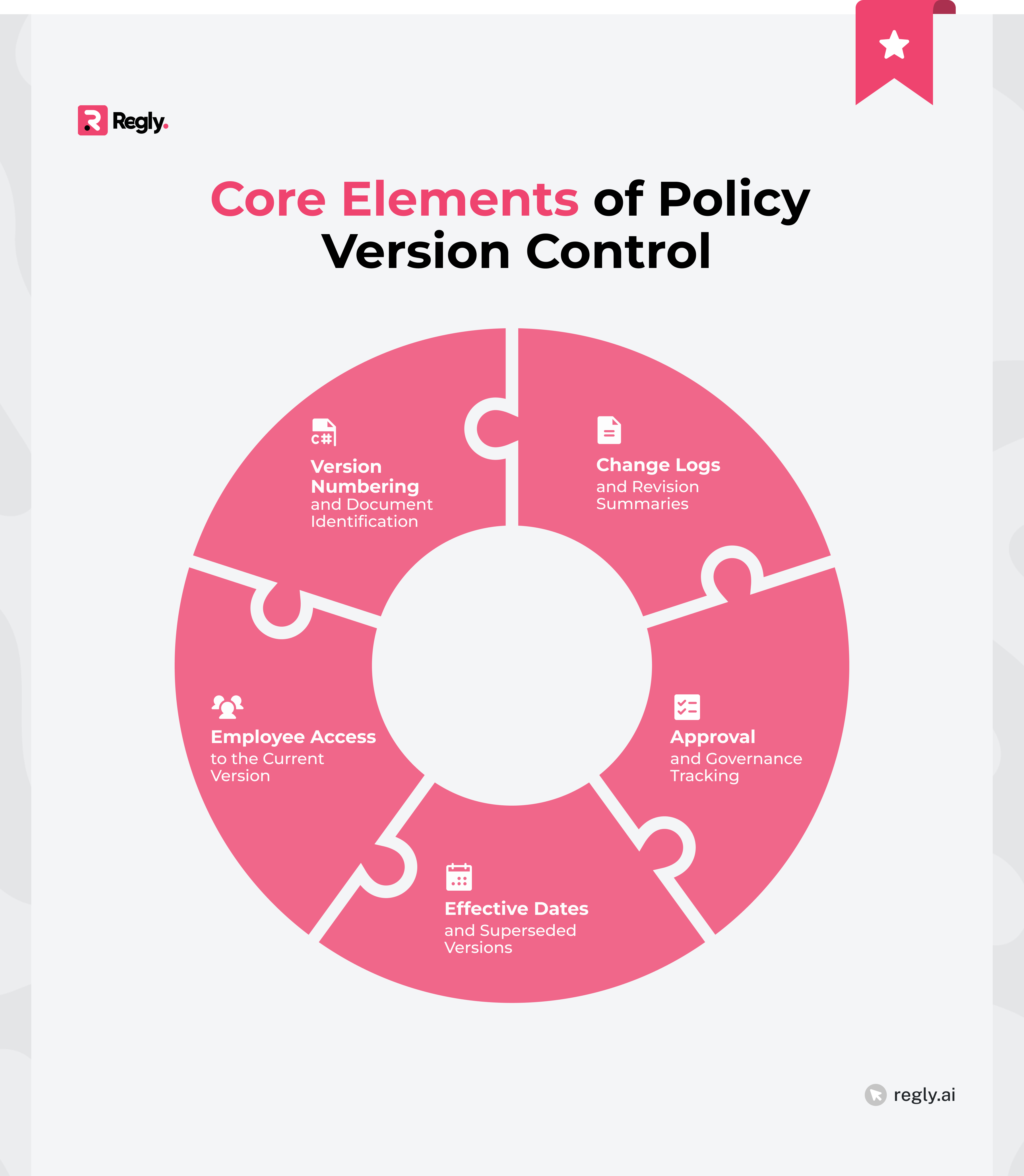
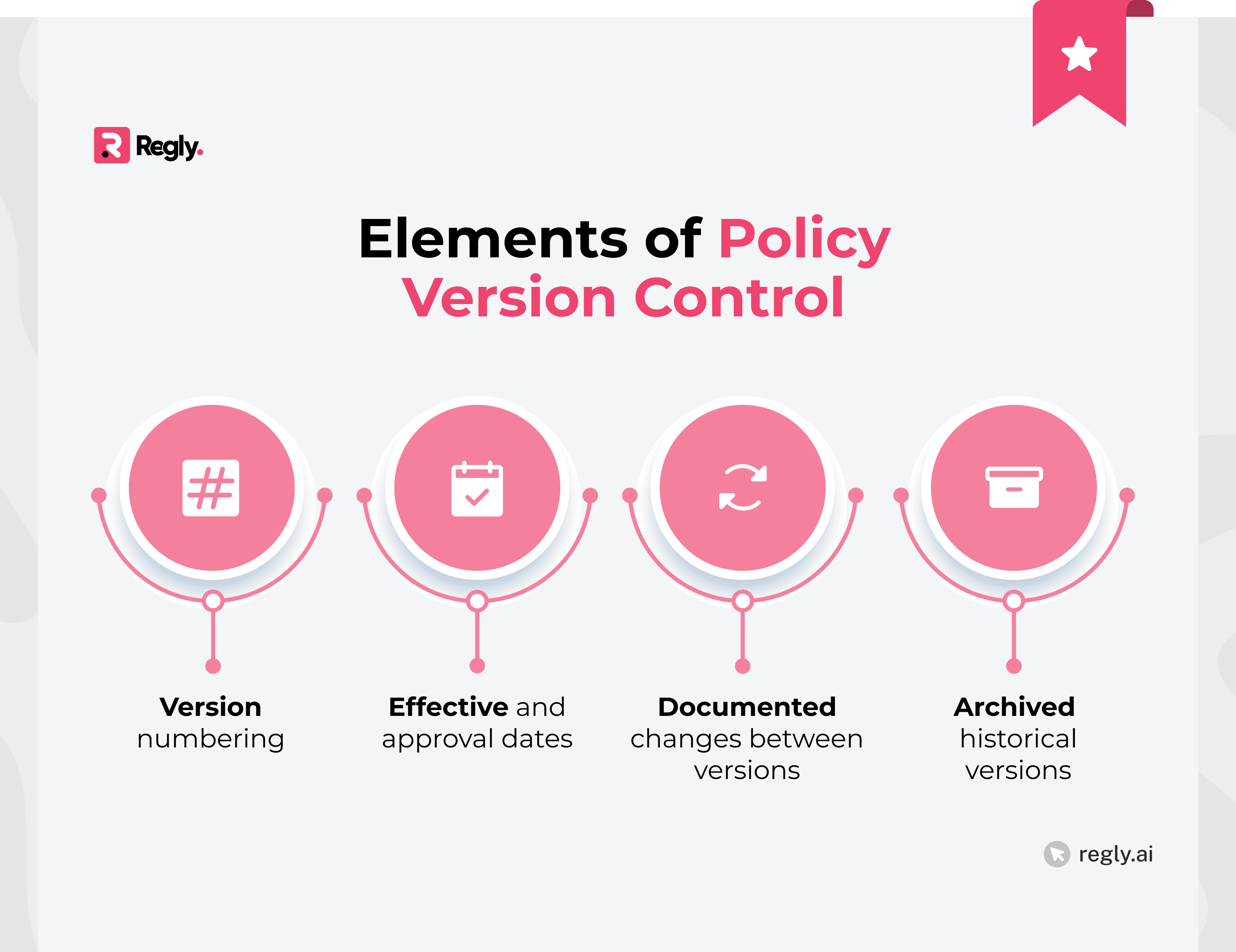
Version Numbering and Document Identification
Each policy should have a clear version identifier that distinguishes it from prior iterations. This is more than labeling a document as “final.”
Version numbering provides a reference point for tracking changes over time. It allows teams to quickly identify which version is current and which versions are archived.
In practice, this means assigning structured version numbers and maintaining consistent naming conventions across all policies.
Change Logs and Revision Summaries
Updating a policy is only part of the process. What matters just as much is documenting what changed and the reason behind it.
A well-maintained change log provides context for each revision and helps connect updates to specific business or regulatory developments.
When that context is missing, policy changes can look inconsistent or unrelated to actual risks.
Approval and Governance Tracking
Policies operate within a firm’s control framework, so updates are expected to go through a formal review and approval process.
Approval tracking creates a clear link between each revision and the decision behind it, identifying who reviewed the change and when it was authorized.
This becomes important during exams, where regulators look for evidence of structured oversight.
Effective Dates and Superseded Versions
Every policy version should clearly state when it becomes effective and what it replaces.
Effective dates establish a timeline that allows firms to reconstruct their compliance posture at any point in time. This is critical when responding to regulatory inquiries tied to specific periods.
Maintaining access to superseded versions ensures that historical records are available when needed.
Employee Access to the Current Version
Having a well-controlled policy means little if employees are not using the correct version.
Policy version control must include a clear mechanism for distributing and accessing the current version. This reduces the risk of outdated procedures being followed in practice.
It also supports training and attestations, which are often reviewed alongside the policies themselves.
Distributing policies is only part of the process. Tracking whether employees have read and acknowledged them is equally important.
Learn more about policy acknowledgment →
Common Policy Version Control Challenges for Fintech Teams
Fintechs are generally aware of the importance of policy version control. Where things tend to break down is in day-to-day execution across different tools, teams, and workflows.
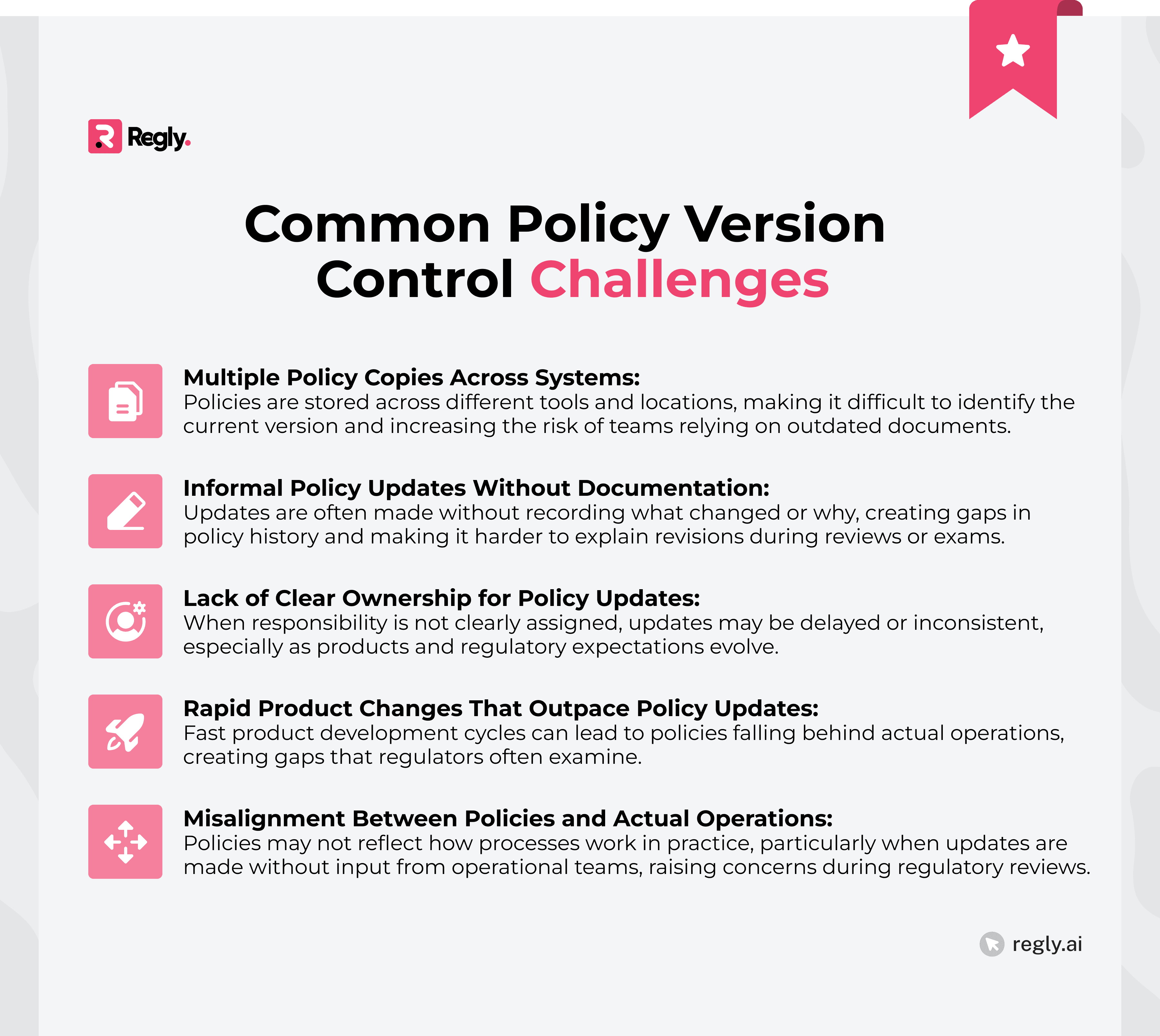
Multiple Policy Copies Across Systems
One of the most common issues is fragmentation. Policies exist across shared drives, internal tools, email attachments, and local files.
When multiple versions exist in different locations, it becomes unclear which version is current. Teams may rely on outdated documents without realizing it, especially without a centralized repository.
This creates confusion during internal reviews and becomes more visible during audits.
Regly Compliance helps fintechs centralize and streamline compliance management →
Informal Policy Updates Without Documentation
In many fintech teams, updates happen quickly and informally. There’s a procedure change, which triggers a control adjustment and edits to a document. But the reason for the changes is not documented.
Over time, this leads to gaps in the policy history. Without a clear record of changes, it becomes difficult to explain why a policy was updated or what triggered the revision.
This lack of context is often flagged during examinations.
Lack of Clear Ownership for Policy Updates
Policy ownership is often spread across multiple teams. Compliance, legal, operations, and product may all have input, but responsibility is not always clearly assigned.
When no one is accountable, updates can be delayed or handled inconsistently. This becomes more noticeable when policies need to reflect new products or regulatory changes.
Defined ownership is critical for maintaining effective version control.
Rapid Product Changes That Outpace Policy Updates
Fintech firms introduce new features, workflows, and integrations at a much faster pace than traditional institutions.
Policy updates often lag behind these changes. By the time documentation is updated, the underlying process may have already evolved.
This creates a gap between written policies and actual operations, which regulators frequently examine.
Misalignment Between Policies and Actual Operations
Even when policies are updated, they do not always reflect how the business operates in practice.
This can happen when updates are made in isolation, without input from the teams executing the processes.
Regulators focus heavily on whether policies match real-world activity. A disconnect here raises concerns about the effectiveness of the compliance program.
Policy Version Control Best Practices for Regulated Fintechs
Effective policy version control requires consistency, structure, and alignment with how the business operates.
Best practices for policy version control include:
Maintain a centralized policy repository: A single source of truth is the foundation of policy version control. When policies are stored across multiple systems, version tracking becomes unreliable. Centralization reduces confusion around which version is current and limits the risk of using outdated documents. Updates, approvals, and access also become easier to manage when everything lives in one place.
Track approvals and governance actions: Policy updates should follow a defined approval workflow. This involves recording who reviewed the policy, when it was approved, and the authority behind that decision. Documenting these governance actions creates a clear link between updates and oversight, which is often reviewed during audits and exams.
Record change summaries for every revision: Each update should include a short explanation of what changed and why. This does not need to be complex, but it should provide enough context to understand the revision. Over time, these summaries create a timeline that shows how policies evolved in response to business changes, regulatory developments, or internal findings.
Align policy updates with product and regulatory changes: Policy updates should not happen in isolation. They should reflect actual changes in the business, whether tied to new features, workflows, or regulatory expectations. When policy version control is aligned with product and compliance changes, it becomes easier to demonstrate that policies reflect real operations. This alignment is often reviewed during regulatory exams.
Link policies to training, attestations, and controls: Policies are only effective if they are understood and followed. Version control should connect policy updates to employee training and attestations. This creates a clear chain between policy changes and how they are implemented in practice. It also provides additional evidence that employees are working from the correct version.
How Compliance Technology Improves Policy Version Control
As policy version control becomes more complex, many firms reach a point where manual processes are no longer sufficient. Spreadsheets, shared drives, and email approvals can work early on, but they tend to break down as the business scales.
Automating Policy Updates and Approvals
When approvals are handled through email threads or ad hoc communication, tracking who approved what and when becomes challenging.
Compliance tools address this by creating defined workflows that guide policy updates through review and approval steps in a consistent way.
Automation helps organize the process, but decision-making and oversight still sit with the team. That distinction is often relevant during audits.
Maintaining Audit Trails and Change History
One of the most practical benefits of compliance technology is the ability to maintain a complete record of policy changes.
Instead of reconstructing history from multiple sources, teams can access a clear timeline of updates, approvals, and revisions in one place. This becomes particularly useful when responding to regulatory requests tied to specific time periods.
Linking Policies to Risk Management and Reporting
Policy version control becomes more effective when it is tied to broader compliance processes such as risk assessments, incident tracking, and internal reporting.
Technology platforms make it possible to connect policy updates directly to these activities, so changes are linked to specific events or findings.
This makes it easier to show that updates are based on actual risk conditions rather than routine reviews, something regulators often examine.
Regly Policy Management
Regly’s Policy Management module is built for fintech teams operating in regulated environments. It centralizes policies, tracks version history, and structures approval workflows.
Drawing on InnReg’s experience working with 100+ innovative fintechs, the module supports compliance operations in a way that reflects how regulated fintechs actually operate.
Because Regly was designed by compliance practitioners, the focus stays on practical execution. Teams can manage updates, maintain audit trails, and connect policies to broader compliance activities without relying on disconnected tools.
This approach supports policy version control as an ongoing process rather than a one-time exercise.
Read our article to learn more about policy management →
—
Policy version control is not just a documentation exercise. It is part of how firms demonstrate that their compliance program is active, maintained, and aligned with how the business actually operates.
The ability to show what changed, when, and why is often what separates a well-managed compliance program from one that struggles during an exam. This is especially true for fintechs, where products and risks evolve quickly.
Ready to Get Started?
Schedule a demo today and find out how Regly can help your business.